<?xml version="1.0" encoding="utf-8" ?>
<rdf:RDF xmlns:rdf="http://www.w3.org/1999/02/22-rdf-syntax-ns#" xmlns:dc="http://purl.org/dc/elements/1.1/" xmlns:syn="http://purl.org/rss/1.0/modules/syndication/" xmlns="http://purl.org/rss/1.0/">


<channel rdf:about="https://www.trinitybristol.org.uk/search_rss">
  <title>Trinity Community Arts</title>
  <link>https://www.trinitybristol.org.uk</link>

  <description>
    
            These are the search results for the query, showing results 1 to 11.
        
  </description>


  <image rdf:resource="https://www.trinitybristol.org.uk/logo.png"/>

  <items>
    <rdf:Seq>
      
        <rdf:li rdf:resource="https://www.trinitybristol.org.uk/whats-on/oscar-anderson-in-conversation"/>
      
      
        <rdf:li rdf:resource="https://www.trinitybristol.org.uk/contact/meet-the-team/edson/creating-a-new-narrative"/>
      
      
        <rdf:li rdf:resource="https://www.trinitybristol.org.uk/about/news/latest-news/benjamin-zephaniah-a-man-of-the-people"/>
      
      
        <rdf:li rdf:resource="https://www.trinitybristol.org.uk/contact/meet-the-team/edson/edson-wins-tinniswood-award-2025"/>
      
      
        <rdf:li rdf:resource="https://www.trinitybristol.org.uk/about/news/latest-news/opinion-voting-matters"/>
      
      
        <rdf:li rdf:resource="https://www.trinitybristol.org.uk/about/news/latest-news/celebrating-local-history-month"/>
      
      
        <rdf:li rdf:resource="https://www.trinitybristol.org.uk/about/news/latest-news/art-of-resistance"/>
      
      
        <rdf:li rdf:resource="https://www.trinitybristol.org.uk/about/news/latest-news/edson-burton-mbe"/>
      
      
        <rdf:li rdf:resource="https://www.trinitybristol.org.uk/activities/art-of-resistance/links/we-need-to-tell-untold-stories"/>
      
      
        <rdf:li rdf:resource="https://www.trinitybristol.org.uk/activities/art-of-resistance/news/edson-burton"/>
      
      
        <rdf:li rdf:resource="https://www.trinitybristol.org.uk/contact/meet-the-team/emma/free-speech-wars-how-did-we-get-here-why-does-it-matter"/>
      
    </rdf:Seq>
  </items>

</channel>


  <item rdf:about="https://www.trinitybristol.org.uk/whats-on/oscar-anderson-in-conversation">
    <title>Oscar Anderson In Conversation </title>
    <link>https://www.trinitybristol.org.uk/whats-on/oscar-anderson-in-conversation</link>
    <description></description>
    <content:encoded xmlns:content="http://purl.org/rss/1.0/modules/content/"><![CDATA[<p class="BCX0 SCXW262229138 Paragraph">An evening is a rare opportunity to hear about Oscar’s inspirations, achievements and challenges in his own words in a conversation with Dr Edson Burton. Videos of Oscar will illustrate the talk in motion.</p>
<p class="BCX0 SCXW262229138 Paragraph">Dancer, actor Oscar Anderson is a force of nature in Bristol’s dance scene. Many will know Oscar for his high energy, highly elegant jazz dance performances as part of Bristol’s award-winning dance troupe the Floor Technicians. Others for his much-loved jazz dance classes at Bristol Dance Centre amongst other venues. He is also the longest serving actor in the BBC flagship drama Casualty.</p>
<p class="BCX0 SCXW262229138 Paragraph">Oscar Anderson in conversation is part of Art of the Possible a series of activities delivered by the Trinity Centre Bristol as part of the restoration of Jacob Wells dance centre.</p>
<p class="BCX0 SCXW262229138 Paragraph">To register your interest, email <a class="BCX0 SCXW262229138 Hyperlink" href="mailto:info@trinitybristol.org.uk" rel="noreferrer noopener" target="_blank">info@trinitybristol.org.uk</a><img src="https://www.trinitybristol.org.uk/whats-on/oscar-anderson-in-conversation" alt="Oscar Anderson In Conversation " id="__mce_tmp" title="Oscar Anderson In Conversation " /><img src="https://www.trinitybristol.org.uk/whats-on/oscar-anderson-in-conversation" alt="Oscar Anderson In Conversation " id="__mce_tmp" title="Oscar Anderson In Conversation " /></p>]]></content:encoded>
    <dc:publisher>No publisher</dc:publisher>
    <dc:creator>&lt;object object at 0x7f6a2148a580&gt;</dc:creator>
    <dc:rights></dc:rights>
    
      <dc:subject>Talks</dc:subject>
    
    
      <dc:subject>edson</dc:subject>
    
    
      <dc:subject>jwb</dc:subject>
    
    <dc:date>2026-03-05T12:34:49Z</dc:date>
    <dc:type>Event</dc:type>
  </item>


  <item rdf:about="https://www.trinitybristol.org.uk/contact/meet-the-team/edson/creating-a-new-narrative">
    <title>Creating a new narrative </title>
    <link>https://www.trinitybristol.org.uk/contact/meet-the-team/edson/creating-a-new-narrative</link>
    <description>In this opinion piece in Bristol 24/7, the good Dr reflects on what a year of culture might mean for Bristol</description>
    
    <dc:publisher>No publisher</dc:publisher>
    <dc:creator>&lt;object object at 0x7f6a2148a580&gt;</dc:creator>
    <dc:rights></dc:rights>
    
      <dc:subject>edson</dc:subject>
    
    <dc:date>2026-01-21T08:30:00Z</dc:date>
    <dc:type>Link</dc:type>
  </item>


  <item rdf:about="https://www.trinitybristol.org.uk/about/news/latest-news/benjamin-zephaniah-a-man-of-the-people">
    <title>Benjamin Zephaniah: A Man of the People</title>
    <link>https://www.trinitybristol.org.uk/about/news/latest-news/benjamin-zephaniah-a-man-of-the-people</link>
    <description>Edson Burton relfects on the work and life of one of the UK’s most iconic poets in recent times</description>
    <content:encoded xmlns:content="http://purl.org/rss/1.0/modules/content/"><![CDATA[<p><img src="https://www.trinitybristol.org.uk/about/news/latest-news/KhaliAckfordKoLABStudiosBZLIVE15.jpg/@@images/56372d31-fa85-44ef-9252-b8c87d69cd37.jpeg" alt="" class="image-inline" title="" />2025 marks the second year since the death of one of the country’s most loved poets. At the end of April, <a class="external-link" href="https://www.stgeorgesbristol.co.uk/whats-on/dis-poetry-a-tribute-to-benjamin-zephaniah/">Bristol’s Lyra Festival </a>will be hosting a celebration of his life, work and his unique connection to Bristol.</p>
<p>As a child growing up in Handsworth, Benjamin was inspired by Jamaica’s poet laureate Louise Bennet, or as she is most affectionately known Ms Lou. Folklorist, scholar and nationalist, Ms Lou brought a dignity and playfulness to Jamaican English which was hitherto described as broken English - this being one of the many legacies of colonialism.</p>
<p>His decision to become a poet came after a period of disruption. Benjamin was a bright, energetic child but struggled to read. Growing up in 1970s Britain dyslexia was often missed especially among children of African Caribbean heritage who were already racially othered by the British education system.</p>
<p>Frustrated, he became involved in petty criminality culminating in a spell in Brixton prison for burglary. Benjamin’s transformation began in earnest from this point. A popular performer, his journey into print began with rejections by major publishers unsure that an audience existed for his work. Reflecting on this period he noted that they <i>"they didn't understand it because it was supposed to be performed."</i></p>
<p style="text-align: center; "><i><img src="https://www.trinitybristol.org.uk/about/news/latest-news/KhaliAckfordKLABStudiosBZ9.jpg/@@images/b4a00940-ee0f-4c5c-acab-a5907c5b7634.jpeg" alt="" class="image-inline" title="" /></i></p>
<p><i></i> Indeed, Benjamin was part of the new wave of second generation Black British poets. Along with Jean Binta Breeze and Linton Kwesi Johnson, he pioneered dub poetry – a form of spoken word inspired by the Caribbean orality syncopated to the sound of the drum. Venues such as the Trinity Centre were part of a receptive circuit welcoming new forms of poetry and music arising from Britain’s new youth cultures.</p>
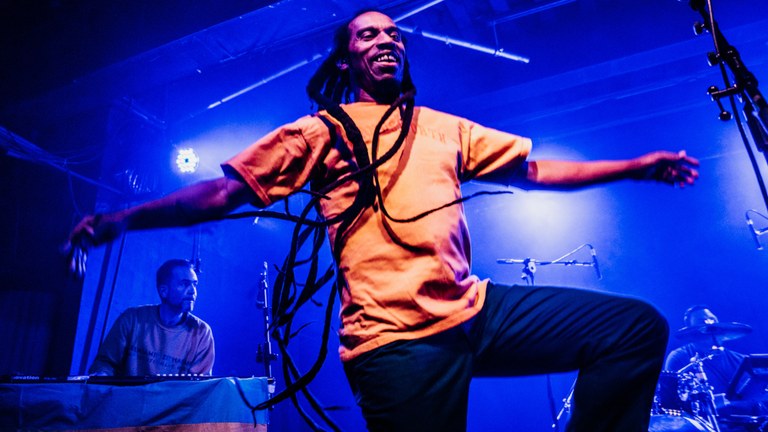
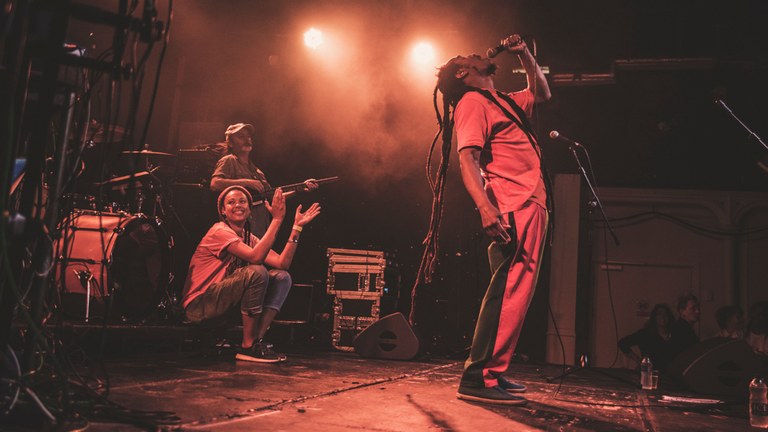
<p>He published his first poetry collection <i>Pen Rhythm</i> by One Books in 1980. Since then, he has been one of Britain’s most prolific writers. As well as writing poetry for children and adults, he has written novels, and memoir. He has been an actor, activist, scholar and musician.    It was this in vain that he is best known to Trinity’s audiences. Benjamin’s 2017 performance at the Centre was one of the standout gigs of the year. His lyricism and energy were enthralling; his combination of charisma and generosity truly unique, and his humour heartwarming.    The iconic image of Benjamin skanking freely locks flowing will live in the memories and digital files of all those who attendance.</p>
<p style="text-align: center; "><img src="https://www.trinitybristol.org.uk/about/news/latest-news/KhaliAckfordKLABStudiosBZ1.jpg/@@images/cf1a1f16-712a-4602-876f-d6fb446fba77.jpeg" alt="" class="image-inline" title="" /></p>
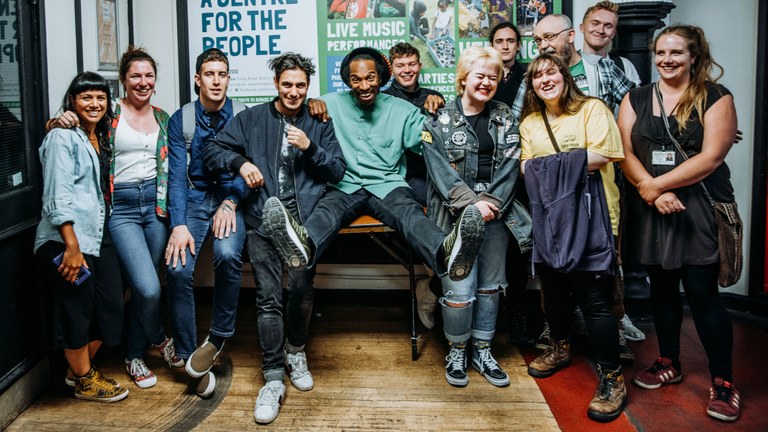
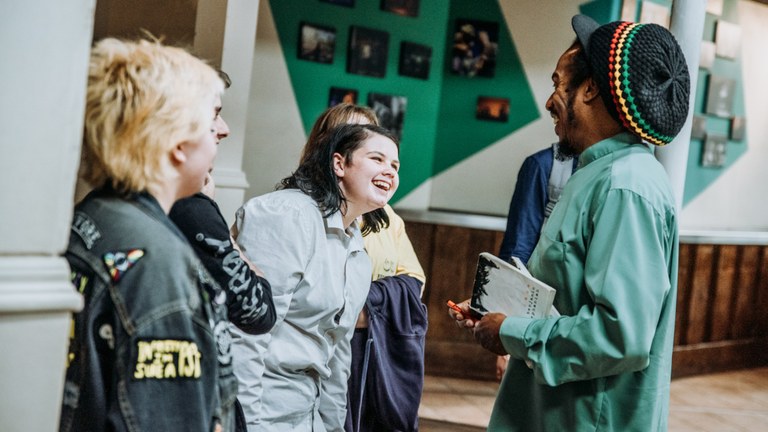
<p>But, away from the stage, to  Trinity’s staff he was the star who came to earth.    During his second visit Benjamin met with young people taking part in Trinity’s flagship initiative <i>Making Tracks</i>. He spent far more time than was originally agreed speaking candidly about his life, art, and the challenges of dyslexia.    The memory of this encounter still lingers among the young people who came that day.</p>
<p>Generations have been disarmed by his accessible verse, and amiability disarmed because belying his wide toothed smile and Midland's patter was an intense passionate commitment to humanity. He was a spiritual giant and a man of the people.</p>
<p><i>By Dr Edson Burton</i></p>
<p style="text-align: center; "><i><img src="https://www.trinitybristol.org.uk/about/news/latest-news/BenjaminZephaniah_2017_TrinityCentre_OnlineArchive_Music.jpg/@@images/d5465352-f83c-4892-8d3c-8b2644f3a6be.jpeg" alt="" class="image-inline" title="" /></i></p>
<p><i>Images © Khali Ackford, <a class="external-link" href="https://www.kolabstudios.co.uk/">KoLAB Studios</a></i></p>]]></content:encoded>
    <dc:publisher>No publisher</dc:publisher>
    <dc:creator>&lt;object object at 0x7f6a2148a580&gt;</dc:creator>
    <dc:rights></dc:rights>
    
      <dc:subject>edson</dc:subject>
    
    
      <dc:subject>jamell</dc:subject>
    
    <dc:date>2025-04-25T10:35:00Z</dc:date>
    <dc:type>News Item</dc:type>
  </item>


  <item rdf:about="https://www.trinitybristol.org.uk/contact/meet-the-team/edson/edson-wins-tinniswood-award-2025">
    <title>Edson wins Tinniswood Award 2025</title>
    <link>https://www.trinitybristol.org.uk/contact/meet-the-team/edson/edson-wins-tinniswood-award-2025</link>
    <description>Well done to Edson for his well earned win for best audio drama script of the year</description>
    <content:encoded xmlns:content="http://purl.org/rss/1.0/modules/content/"><![CDATA[<p><img src="https://www.trinitybristol.org.uk/contact/meet-the-team/edson/ADAheaderbannerfinal.jpg/@@images/85390606-585f-420e-95dd-c5e983757e4b.jpeg" alt="" class="image-inline" title="" /></p>
<blockquote class="pullquote"><i>“A hugely entertaining take on the Robinson Crusoe story. Friday is an upper-class castaway outraged by Crusoe’s entitled behaviour. But we suspect there’s more to Friday than the arrogant posho we first encounter – and sure enough there is. A slow burn brilliantly achieved, this play skilfully uses the inspiration of a classic tale to reframe assumptions about race and class in a witty and engaging way. Long narrations are often the radio writer’s lazy option, but Edson Burton’s are exquisite. This is a terrific writer with a deep love of language and a thorough understanding of structure.”</i> Judging panel</blockquote>
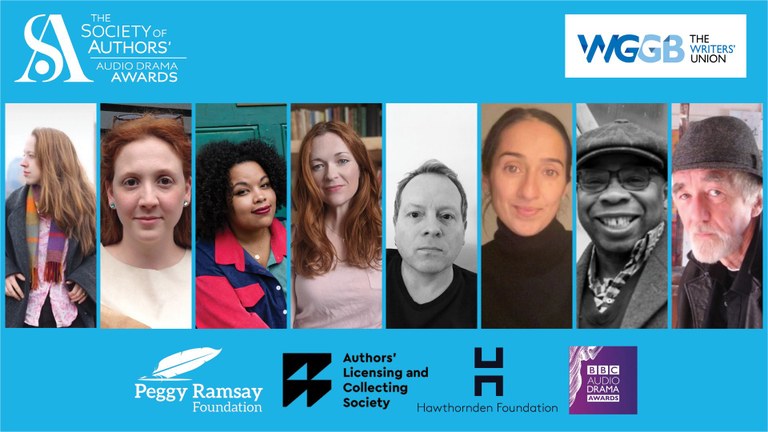
<p>We're all super excited and proud to announce Edson Burton as the winner of the <a class="external-link" href="https://writersguild.org.uk/edson-burton-wins-2025-tinniswood-award-for-man-friday/">2025 Tinniswood Award,</a> which is organised by The Writers' Guild of Great Britain and the Society of Authors.</p>
<p>The award, in recognition of the best audio drama script of the year, was for <a class="external-link" href="https://www.bbc.co.uk/programmes/m00236rt"><i>Man Friday</i></a>, a BBC Radio 4 drama broadcast re-imagining Daniel Defoe's classic story <i>Robinson Crusoe </i>from the perspective of Man Friday.</p>
<p>Edson Burton received the prize of £3,000, sponsored by the Authors’ Licensing and Collecting Society, at the BBC Audio Drama Awards on 30 March 2025. He was presented the award by writer and actor Paterson Joseph.</p>
<p>This well-deserved recognition highlights Edson Burton’s exceptional storytelling, cementing Man Friday as a powerful and thought-provoking reimagining of a literary classic. Though, it wasn't the 'Twerking' award that one of our colleagues misheard he'd won!</p>
<p>As Edson put it, it was one of those rare productions where everything just clicked, nothing felt forced, and the cast came together naturally to create something truly special.</p>
<p>A big well done from all the Trinity Team!</p>]]></content:encoded>
    <dc:publisher>No publisher</dc:publisher>
    <dc:creator>&lt;object object at 0x7f6a2148a580&gt;</dc:creator>
    <dc:rights></dc:rights>
    
      <dc:subject>edson</dc:subject>
    
    <dc:date>2025-04-01T10:38:29Z</dc:date>
    <dc:type>News Item</dc:type>
  </item>


  <item rdf:about="https://www.trinitybristol.org.uk/about/news/latest-news/opinion-voting-matters">
    <title>Opinion: Voting matters</title>
    <link>https://www.trinitybristol.org.uk/about/news/latest-news/opinion-voting-matters</link>
    <description>Dr Edson Burton, Curator at Trinity, reflects on his opinion of the role of voting in democratic decision making</description>
    <content:encoded xmlns:content="http://purl.org/rss/1.0/modules/content/"><![CDATA[<p><img src="https://www.trinitybristol.org.uk/about/news/latest-news/1985Oct25InternationalTimeOffforWomendayPost.jpg" alt="1985 Oct 25 International Time Off for Women day Post" class="image-inline" title="1985 Oct 25 International Time Off for Women day Post" /></p>
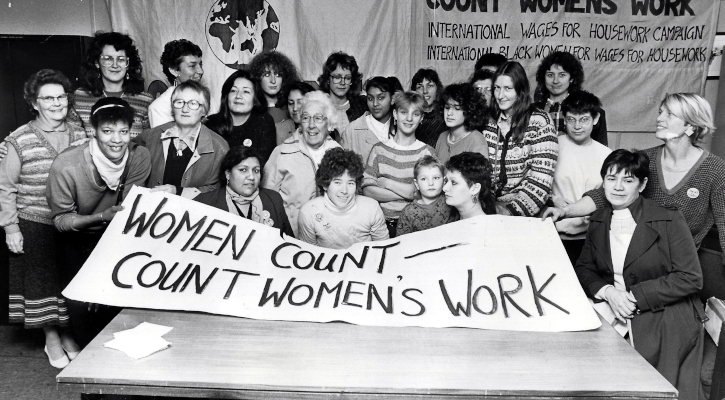
<p><span class="discreet">1985 Oct 25 International Time Off for Women Day, credit Evening Post, collected as part of <a class="external-link" href="https://archive.trinitybristol.org.uk/timelines/radicalism">Art of Resistance </a></span></p>
<p>Trinity is committed to creating ways in which citizens can take an active role in shaping arts and culture. In 2025 Our <a href="https://www.trinitybristol.org.uk/about/news/latest-news/deliberative-workshops" class="internal-link">Citizens Assembly for Culture</a>, created, in partnership with St Pauls Carnival and Citizens in Power will take place, offering people living in the West of England Combined Authority region the opportunity to actively shape the arts and cultural experiences that matter most to them and their communities.</p>
<p>As part of this commitment we are connecting with leading voices in the cultural sector to ask them to share their thoughts on the different civic and democratic tools that we as citizens can access. In the first in our series of opinion pieces exploring civic participation Dr Edson Burton, Curator at Trinity, reflects on the role of voting in democratic decision making.</p>
<blockquote class="pullquote">"The Bristol Bus Boycott, the Gay Rights Movement, the Disability Rights Movements of the 1960s-1990s. These campaigns or movements have led to legislative changes that have, in turn, transformed our social attitudes"</blockquote>
<p><strong> </strong></p>
<p><strong>Opinion: Voting Matters, Dr Edson Burton</strong></p>
<p>‘Politics time again, are you gonna vote now?’ lamented the reformed Buju Banton, alluding to the lethal elections of his native Jamaica. But the question could equally be applied to the forthcoming British election. During the last General Election (2019), 67% of the population voted, up from the all-time low of just over 59% in 2001.</p>
<p>While that figure is on the rise, it still means that over 30% of the population has no say in how they are governed. According to a recent YouGov poll, the reasons given for not voting include a lack of access to polling stations, ineligibility, and no forms of ID. However, the most prominent reasons are a lack of trust in politicians and a feeling that voting will make little <a class="external-link" href="https://www.sortitionfoundation.org/the_growing_trust_crisis_in_uk_politics">difference</a>.</p>
<p>One might argue that cynicism is rife in politics, with pledges that are misleading if not downright dishonest. It has ever been thus, but in a crowded information world, voters may become so confused as to become indifferent.</p>
<p>Perhaps the dance of truth owes as much to us as to our politicians. Few would jump for joy at the thought of higher taxes, but without increased taxation, how can we fund our troubled public services, invest in green technology, or ensure education offers opportunities for all?</p>
<p>Responding to concerns over national identity, political parties offer a raft of immigration control measures that, if implemented, would lead to a national staffing crisis. Yet, to extol the virtues of immigration is to risk electoral suicide.</p>
<p>The convergence between the main political parties may also fuel voter apathy. "There's no difference between them" is the often-heard lament. Despite the barbs and bites, there appears, at times, to be more that unites than divides the main parties. They vie to expose the actual commitment to an agreed-upon agenda rather than the agenda itself.</p>
<p>But it is worth remembering that this consensus is the result of political participation. The impetus to secure or woo working-class votes in this election is a result of the extension of the franchise beyond a small property-owning class. Once enfranchised, all parties have had to take seriously the interests of a wider range of citizens with divergent interests and lives. Further franchise expansion was not some benign gift of a ruling class but the result of blood and guts campaigns by working-class men and women. Think Chartists, Unions, the Suffragettes.</p>
<p>What is the point of voting if you cannot meaningfully participate in society? If your race meant you could be legally denied access to jobs or employment? If your gender meant you were denied promotion, let alone equal pay? If your sexuality or sexual identity could lead to your imprisonment?</p>
<p>Such was the case prior to major civil rights campaigns: the Bristol Bus Boycott, the Gay Rights Movement, the Disability Rights Movements of the 1960s-1990s. These campaigns or movements have led to legislative changes that have, in turn, transformed our social attitudes.</p>
<p>Broadly speaking, all our political parties have arrived at baseline of inclusivity consensus. In recognition of new voting demographics and the reputational damage of appearing to be illiberal parties may wish to appear to be race, gender, and disability friendly</p>
<p>But how safe is this consensus? Is it a pragmatic concession to the present while some hanker for an illiberal past? The USA has recently demonstrated the danger of complacency as civil rights advances have been eroded by reactionary forces. Could the same thing happen in England? Perhaps if it is electorally beneficial, but certainly not if it is electorally damaging. It could only be so if we vote or hint that our vote is for the preservation of our rights.</p>
<p>Beyond preserving our rights, further changes that we want to see in society will inevitably involve legislation, which in turn will involve exerting pressure upon politicians. The time scale of change may not suit the urgency of our demands, but rather than lose heart, we must continue to exert political pressure through campaigning and ultimately through the ballot.</p>
<p>Not voting is a verdict on politics, but it cannot lead to change; rather, it will maintain the status quo. In the calculus of win or lose, only voters and their interest's matter.</p>
<p><strong>Vote.</strong></p>
<p><strong>Find out more about movements that have shaped society by exploring our interactive<a class="external-link" href="https://archive.trinitybristol.org.uk/timelines"> heritage timelines</a></strong></p>]]></content:encoded>
    <dc:publisher>No publisher</dc:publisher>
    <dc:creator>sarah</dc:creator>
    <dc:rights></dc:rights>
    
      <dc:subject>edson</dc:subject>
    
    
      <dc:subject>opinion</dc:subject>
    
    
      <dc:subject>citizens for culture</dc:subject>
    
    
      <dc:subject>community</dc:subject>
    
    <dc:date>2024-07-01T12:10:00Z</dc:date>
    <dc:type>News Item</dc:type>
  </item>


  <item rdf:about="https://www.trinitybristol.org.uk/about/news/latest-news/celebrating-local-history-month">
    <title>Celebrating local and community history month</title>
    <link>https://www.trinitybristol.org.uk/about/news/latest-news/celebrating-local-history-month</link>
    <description>This Local History Month, we’ve been investigating the rich history of Old Market in East Bristol, where The Trinity Centre calls home</description>
    <content:encoded xmlns:content="http://purl.org/rss/1.0/modules/content/"><![CDATA[<p><img src="https://www.trinitybristol.org.uk/about/news/latest-news/copy_of_LocalHistoryNewsMain.jpg" alt="" class="image-inline" title="" /></p>
<p><span class="discreet">Old Market Bristol</span></p>
<p>May is Local History month, so to celebrate we’ve been looking back at our heritage project, Vice and Virtue, that documented the rich history of Old Market in East Bristol, where The Trinity Centre calls home.</p>
<p><strong>Early History</strong></p>
<p>Old Market is an ancient marketplace which once stood outside the walls of the Old City and served as a main thoroughfare for goods arriving from London into Bristol.</p>
<p>The area contains some of Bristol’s oldest buildings, with over 60 listed buildings including the Methodist Central Hall, The Palace Hotel, and – of course – Holy Trinity Church, aka The Trinity Centre.</p>
<p>Following the demolition of Bristol Castle in 1656, the area was redeveloped and stone from the castle is said to have been used to repave Old Market Street, with many of the original 17th century building frontages remaining to this day.</p>
<p>Old Market Street was a thriving centre for trade in meat and vegetables, as well as being home to an assortment of small industries specialising in the production of farming utensils, as well as several brewers, maltsters, and public houses.</p>
<p><strong>Industrial Revolution</strong></p>
<p>The Industrial Revolution radically transformed Old Market, with major new businesses attracting workers from across the South West. New opportunities for employment led to East Bristol’s rapid urbanisation during this period. By 1881, the population of St Phillips rose from approximately 8,000 in 1801 to 50,000.</p>
<p>Religion was seen as a major civilising force that followed rapid urbanisation, and as such, many churches were built in these expanding urban areas. One such church was Holy Trinity Church, now The Trinity Centre, which was built between 1829 and 1832 by Thomas Rickman and Henry Hutchinson, two architects from Birmingham and seated 1,500 people.</p>
<p>The new railway added to the hustle and bustle of Old Market. Traffic increased significantly when an electric tramway was introduced in 1876. Unsurprisingly, the street market struggled to coexist with the tram network, and the market ceased to operate during the 19th century, which signalled the start of rapid change in the area.</p>
<p><strong>The Golden Years, 1900-1939</strong></p>
<p>Old Market Street, with its transport links, entertainment centres and range of shops, was an important and vibrant part of Bristol. The first 30 years of the 20th century were marked by a series of bold new development, including The King’s Cinema, The Methodist Central Hall and The Empire Theatre, catering to a new appetite for culture and the arts. While the traditional street market from which Old Market gets its name had faded out during this period, in its place came a range of new stores and retail businesses.</p>
<p>Old Market was part of the ‘golden mile’ of streets that stretched from Lawrence Hill to the City Centre, with a diverse offering of shops attracting visitors from far and wide.</p>
<p><strong>Decline and Rejuvenation</strong></p>
<p>Bristol breathed a sigh of relief after the Second World War, in which the city’s Historic City Centre was decimated during the Bristol Blitz, with Castle and Vine Street being flattened by bombings. However, across the city, including in Old Market, life did not return to normal immediately, with essential food items subject to rationing until 1954.</p>
<p>After the Second World War, Old Market had become increasingly isolated and sidelined. Now Castle Street was no more, Old Market stood on the other side of a bomb site which many Bristolians feared to cross. The electric trams ceased operation in 1941, and by the 1950s, St Philips Station was closed to passengers, further isolating the area.</p>
<p>The bombing of Bristol’s historic centre led to new approaches to housing, in particular high-rise flats of the 1950s, which dramatically changed the face of St Jude’s and Old Market. Old Market also had to compete with the newly built Broadmead shopping centre. The development of the ring road and roundabout as part of the 1966 Development Plan further isolated Old Market from the rest of Central Bristol. Within a dozen years, the ‘high street’ atmosphere of Old Market had all but disappeared, with a dramatic decrease in footfall in the area.</p>
<p>However, the idea that Old Market went into terminal decline after the Ring Road masks a more complex picture. Old Market’s isolation opened a space in which new cultures and subcultures emerged. Since then, Old Market has becoming a bustling centre of nightlife and culture, becoming a home for Bristol’s LGBTQ+ community, alongside a new and diverse offering of restaurants, bars and clubs. With one of the fastest growing populations in Bristol, Old Market’s future seems to be one defined by its eclectic mix of cultures and lifestyles.</p>
<p>Click <a class="external-link" href="https://archive.trinitybristol.org.uk/timelines">here</a> to explore Trinity's archives to find out more about the history of The Trinity Centre and Old Market.</p>
<p>This news item is based on information gathered as part of Trinity's <a href="https://www.trinitybristol.org.uk/activities/past-projects/heritage/news/vice-and-virtue" class="internal-link">Vice and Virtue</a> project.</p>]]></content:encoded>
    <dc:publisher>No publisher</dc:publisher>
    <dc:creator>&lt;object object at 0x7f6a2148a580&gt;</dc:creator>
    <dc:rights></dc:rights>
    
      <dc:subject>edson</dc:subject>
    
    
      <dc:subject>holy trinity church</dc:subject>
    
    
      <dc:subject>community-timeline</dc:subject>
    
    
      <dc:subject>heritage</dc:subject>
    
    <dc:date>2024-05-10T08:40:00Z</dc:date>
    <dc:type>News Item</dc:type>
  </item>


  <item rdf:about="https://www.trinitybristol.org.uk/about/news/latest-news/art-of-resistance">
    <title>Art of Resistance </title>
    <link>https://www.trinitybristol.org.uk/about/news/latest-news/art-of-resistance</link>
    <description>End of project report for the Heritage Lottery Funded project </description>
    <content:encoded xmlns:content="http://purl.org/rss/1.0/modules/content/"><![CDATA[<p><img src="https://www.trinitybristol.org.uk/about/news/latest-news/DSC_9328.jpg" alt="AOR workshop Khali Ackford" class="image-inline" title="AOR workshop Khali Ackford" /></p>
<p><span class="discreet">Activism through the lens workshop, photo Khali Ackford </span></p>
<p>The "Art of Resistance" project, made possible with support from the Heritage Lottery Fund, documented and celebrated the human stories behind activist movements in Bristol. The project focused on the rich histories of five key activist movements from the last 100yrs: Women’s Equality, Workers Rights, Anti-Racism &amp; Anti-Fascism, Counterculture &amp; Reclaim the Environment. Through collecting oral histories and retaining mixed art forms (e.g. poetry, textiles, banners, music, photography) from protest movements we celebrated the rich heritage of Bristol, and its citizens, as a 'city of protest' to educate, inspire and retain this rich history for ours and future generations.</p>
<blockquote class="pullquote">"What I noticed was by taking part in this  project, people discovered that there are so  many people battling injustices and fighting  against social injustices and yet so often don’t  see themselves as an activist." Miranda Rae, Facilitator 'Stories of Resistance'</blockquote>
<p>The project, led by historian and writer Dr Edson Burton, programmed an array of activities, including interviews, workshops, performances, film screenings, and exhibitions - engaging over 3226 audience members across 45 events and activities.</p>
<p>As part of the project we created opportunities that enabled first-step engagement  with heritage – providing space for people to explore their  heritage and learn new skills in research 83 volunteers took part in 69 hours of training  delivered by 11 professionals.</p>
<p>Events included 'The Final Frontier', a creative conference of artists  and activists and commentators, we welcomed Soundsystem pioneers DJ Stryda,  Lioness, Big D and Vibronics for a 'Desert Island Discs' style event in  our outdoor venue. We curated three exhibitions' exploring protest through various  artforms. 'Snapshots of Resistance' (online &amp; in person)  showcased a selection of photographs documenting women  protestors &amp; pioneering artists.</p>
<p>We preserved local testimonies of activism across  generations through 'I Remember When'. During these sessions we collected memories  and artefacts that contributed to our end of project  exhibition, book publication and online archive. Participants included Laura Corballis, Deasy Bamford, Gill  Haugh, Ros Beauhill, Lilieth Morrison and Colin Moody.</p>
<p>Oral histories collected as part of the project have been captured in the table book ‘Art &amp; Activism Vol 1: A Portrait. Alongside this bringing the project to life, people can explore the stories further via our interactive <a class="external-link" href="https://archive.trinitybristol.org.uk/timelines/radicalism">Heritage Archive</a>, where you can listen to oral testimonies, watch videos and explore photos and other items gathered during two years of the Art of Resistance project.</p>
<p>To find out more about the project read the Art of Resistance report <a href="https://www.trinitybristol.org.uk/activities/art-of-resistance/art-of-resistance" class="external-link">here.</a></p>
<p><img src="https://www.trinitybristol.org.uk/activities/art-of-resistance/links/HeritageLotteryLogo.png/@@images/537abcf1-444e-4c91-a8c0-083e3df531af.png" alt="" class="image-inline" title="" /></p>]]></content:encoded>
    <dc:publisher>No publisher</dc:publisher>
    <dc:creator>sarah</dc:creator>
    <dc:rights></dc:rights>
    
      <dc:subject>edson</dc:subject>
    
    
      <dc:subject>heritage</dc:subject>
    
    <dc:date>2023-05-01T00:00:00Z</dc:date>
    <dc:type>News Item</dc:type>
  </item>


  <item rdf:about="https://www.trinitybristol.org.uk/about/news/latest-news/edson-burton-mbe">
    <title>Edson Burton MBE</title>
    <link>https://www.trinitybristol.org.uk/about/news/latest-news/edson-burton-mbe</link>
    <description>Dr Edson Burton reflects on receiving an MBE in the New Years Honours List.</description>
    <content:encoded xmlns:content="http://purl.org/rss/1.0/modules/content/"><![CDATA[<p><img src="https://www.trinitybristol.org.uk/about/news/latest-news/edson169.jpeg" alt="" class="image-inline" title="" /></p>
<p><span class="discreet">Image credit: Dr Edson Burton</span></p>
<p>From exploring the history of <a href="https://www.trinitybristol.org.uk/activities/archive/holy-trinity-church" class="external-link">Trinity's building</a>, documenting Bristol's rich history of <a href="https://www.trinitybristol.org.uk/activities/art-of-resistance" class="internal-link">activism</a> to boldly retelling of <a href="https://www.trinitybristol.org.uk/activities/past-projects/bridges/news/bridges-project-round-up" class="internal-link">Homer's <i>The Odyssey</i></a> Trinity Associate Director, Dr Edson Burton has been the driving force behind Trinity's heritage and cultural offers. As part of this yrs Honours list Edson was awarded an MBE for his services to the <i>arts and to the community in Bristol </i>and we<i> </i>caught up with him as he shared his reflections upon receiving this award.</p>
<p>"I received an email telling me I’d be nominated for an MBE, and initially I thought it was a hoax – one of those scam emails that you get, some kind of con for unsuspecting but egotistical people. As I realised it was true, initially I didn’t feel any great qualms about saying yes, and I also didn’t have much time because the email had been written a few weeks before and came into my inbox late. So, I said yes, and I think for me the reason why it felt like an easy decision, at the time, is partly because, when it comes to it, I don’t see it so much in terms of the Empire and the nomenclature of Empire, but more as a civic award. But at the end of the day, to be honest, it’s nice to feel that you’ve been doing something useful – and I still dispute how useful I have been – but I was honoured that whatever contribution I’d been making had been in some way recognised.</p>
<blockquote class="pullquote">"At the end of the day my politics isn’t going to shift or change in anyway – I'm still going to wear gaudy costumes and run around half-naked at Shambala and be an advocate for all kinds of things. None of that is going to change"</blockquote>
<p>It’s always loaded when someone of Colour accepts an MBE. The concern is that it’s loaded in a way that it isn’t for White people. I suppose it’s probably loaded if you were a member of the socialist left, if Billy Bragg got awarded an MBE for example, so maybe it’s more about politics than race. We’re at a point in history where notions of decolonisation are to the fore, alongside what British identity means and the injustices of the Empire.</p>
<p>We live in a progressive city, but there are tribes within it, and while we might share broader aims and agendas, sometimes within our tribes, there’s really different ways of thinking about monarchy and status.</p>
<p>But I'm curious about it – I didn’t need it, I haven’t asked for it, but I also recognise that we all stand at a point in history and I’m part of that story, that moment in history in which this civic award means a particular thing, and that still has some weight and impact. That weight and impact is also an echo of my family journey from the Caribbean to growing up in Bedford to where I am today. I think it [the MBE] being part of that particular story is quite powerful.</p>
<p>I think [accepting] the offer of it is greater than a gesture of a no because it may open some doors and add some weight to conversations, but also in the wider story it lands with a particular gravitas that not having it wouldn’t...The problem is, there are two challenges associated with the award: the monarchy and where one sits with that, and the Empire word. As a writer, if we think about the deconstruction of language and its usage and meaning, it completely changes. It’s [Empire] an anachronistic term for something that means something completely different now. It feels a bit facetious, in this day and age, with our awareness of meaning and how meaning shifts, to be still insisting that that’s what it means. It’s a civic award with an anachronistic title. I guess it’s one of those things that any kind of shift gets massively politicised, and the ruptures that come from that shift can, ironically, create an even more hostile environment for progressive thinkers.</p>
<p>So, when all is said and done, I go back to the original thing of curiosity, what might it confer, and I’m also chuffed that some people I know said thank you for doing whatever it is you do. For me, the arbitrariness of this, and why I’m also uneasy about it, is that among my networks there are so many brilliant people doing amazing work, selflessly and being under-recognised – I do a lot of forward-facing, public work which gets noticed, and I’m also aware that friends are doing stuff that I admire but their sense of service is quiet. So, there’s also a sense of humility, not out of some kind of imposter syndrome, but it’s just an understanding that there’s a whole raft of people that go unrecognised".</p>
<p>I can’t say I’ve started an organisation or done this, but sometimes occupying a space is really important, especially if that space isn’t normally available, especially if arguments can be seen as very binary. There’s so much emotional pain when we talk about race, class, sexuality – so much pain of people not being seen, othered, ostracised. Trying to hold those things in respect and balance and have those conversations is so important.</p>]]></content:encoded>
    <dc:publisher>No publisher</dc:publisher>
    <dc:creator>&lt;object object at 0x7f6a2148a580&gt;</dc:creator>
    <dc:rights></dc:rights>
    
      <dc:subject>edson</dc:subject>
    
    <dc:date>2023-01-26T09:35:00Z</dc:date>
    <dc:type>News Item</dc:type>
  </item>


  <item rdf:about="https://www.trinitybristol.org.uk/activities/art-of-resistance/links/we-need-to-tell-untold-stories">
    <title>We need to tell untold stories</title>
    <link>https://www.trinitybristol.org.uk/activities/art-of-resistance/links/we-need-to-tell-untold-stories</link>
    <description>Dr Edson Burton writes for National Lottery Heritage Fund about our Art of Resistance project
</description>
    
    <dc:publisher>No publisher</dc:publisher>
    <dc:creator>&lt;object object at 0x7f6a2148a580&gt;</dc:creator>
    <dc:rights></dc:rights>
    
      <dc:subject>edson</dc:subject>
    
    
      <dc:subject>highlight</dc:subject>
    
    <dc:date>2022-11-01T09:25:00Z</dc:date>
    <dc:type>Link</dc:type>
  </item>


  <item rdf:about="https://www.trinitybristol.org.uk/activities/art-of-resistance/news/edson-burton">
    <title>Dr Edson Burton: #Resist Curator</title>
    <link>https://www.trinitybristol.org.uk/activities/art-of-resistance/news/edson-burton</link>
    <description>Meet Dr Edson Burton, Working Class Equality Researcher and Curator for the Art of Resistance project</description>
    <content:encoded xmlns:content="http://purl.org/rss/1.0/modules/content/"><![CDATA[<p><img src="https://www.trinitybristol.org.uk/activities/art-of-resistance/news/EdsonShoot73of90.jpg" alt="" class="image-inline" title="" /></p>
<p style="text-align: right; "><span class="discreet">©Sham Ahmed</span></p>
<p>Meet Dr Edson Burton, Working Class Equality Researcher for the Art of Resistance project.</p>
<p>Dr Edson Burton is a historian, writer and curator living in Bristol since 1994.  Old Market, &amp; Edson joined the Trinity staff team in 2010 to lead What’s Your Trinity Story Project, since then he has led the ground breaking Old Market Study Vice &amp; Virtue, Bridges &amp; Heart &amp; Soul projects. He is co-author of What’s Your Trinity Story &amp; Vice &amp; Virtue. He is a regular voice on local and national radio and television.<br /><br />His areas of interest include the history of Old Market and the transatlantic slave trade. He is co-author of What’s Your Trinity Story, Vice and Virtue and the poetry collection Seasoned.</p>
<p>Edson is also heading up the project as Heritage Curator. Please <a href="https://www.trinitybristol.org.uk/contact" class="internal-link">get in touch</a> with him if you're interested in getting involved with the project.</p>
<p><a href="https://www.trinitybristol.org.uk/activities/art-of-resistance/more-info" class="internal-link">Click here to read about the other #Resist Researchers.</a></p>]]></content:encoded>
    <dc:publisher>No publisher</dc:publisher>
    <dc:creator>&lt;object object at 0x7f6a2148a580&gt;</dc:creator>
    <dc:rights></dc:rights>
    
      <dc:subject>researcher</dc:subject>
    
    
      <dc:subject>edson</dc:subject>
    
    <dc:date>2020-12-31T00:00:00Z</dc:date>
    <dc:type>News Item</dc:type>
  </item>


  <item rdf:about="https://www.trinitybristol.org.uk/contact/meet-the-team/emma/free-speech-wars-how-did-we-get-here-why-does-it-matter">
    <title>Free speech wars: How did we get here &amp; why does it matter?</title>
    <link>https://www.trinitybristol.org.uk/contact/meet-the-team/emma/free-speech-wars-how-did-we-get-here-why-does-it-matter</link>
    <description>Book of essays incl one by Team Trinity; diverse voices explore who gets to exercise free speech, what happens when powerful voices are challenged, and how free speech has been weaponised in various debates

</description>
    <content:encoded xmlns:content="http://purl.org/rss/1.0/modules/content/"><![CDATA[<p><em><a class="external-link" href="https://manchesteruniversitypress.co.uk/9781526151162/">The Free Speech Wars</a></em>, edited by Charlotte Lydia Riley and published by Manchester University Press (2020), is a collection of essays that examines the complexities and debates surrounding free speech in contemporary society.</p>
<p>The book features a co-written essay by Trinity team members <a href="https://www.trinitybristol.org.uk/contact/meet-the-team/emma" class="internal-link">Emma Harvey </a>and <a href="https://www.trinitybristol.org.uk/contact/meet-the-team/edson" class="internal-link">Dr Edson Burton</a> titled <i>In a diverse society, is freedom of speech realisable?</i></p>
<p>The pair discuss the challenges of balancing free speech with building safe and inclusive intersectional community spaces. They reflect on experiences where competing equality agendas have led to conflicts, highlighting the complexities faced by those managing public spaces in fostering open dialogue while ensuring inclusivity means just that.</p>
<p>The book brings together a diverse group of commentators, activists, and academics to explore who gets to exercise free speech, the consequences when powerful voices are challenged, and how free speech has been weaponised in various debates.</p>
<p>It delves into the spaces and structures of speech, such as mass media, universities, public events, political rallies, and the internet, and investigates how acts like censorship, boycotts, and protests have evolved historically and inform present discussions.</p>
<p>Other essays include:</p>
<p><strong>Gabriel Moshenska</strong>: <i>Anatomy of a 'trigger warning' scandal </i>Moshenska recounts a personal experience where his inclusion of content warnings in a course on the forensics of genocide and modern warfare became the centre of controversy and the broader context of academia and free speech</p>
<p><strong>Shaun McDaid &amp; Catherine McGlynn:</strong> <i>Free speech and preventing radicalisation in higher education</i> Examines the impact of the UK's Prevent duty on free speech within universities, advocating for its abolition, highlighting how the policy inadvertently suppresses legitimate discourse in higher education.</p>
<p><strong>Paul Whickman</strong>: <i>Teaching 'freedom of speech' freely </i>Whickman reflects on his experiences teaching literary censorship and free speech and discusses the importance of fostering a respectful and diverse environment to encourage open dialogue.</p>
<p>These essays, among others in the collection, provide nuanced perspectives on the multifaceted debates surrounding free speech, its limitations, and its implications in various societal contexts.</p>
<p class="callout"><a class="external-link" href="https://manchesteruniversitypress.co.uk/9781526151162/">The free speech wars</a>:  How did we get here and why does it matter? edited by Charlotte Lydia Riley is available to buy from Manchester Univeristy Press, £14.99</p>]]></content:encoded>
    <dc:publisher>No publisher</dc:publisher>
    <dc:creator>&lt;object object at 0x7f6a2148a580&gt;</dc:creator>
    <dc:rights></dc:rights>
    
      <dc:subject>edson</dc:subject>
    
    
      <dc:subject>emma</dc:subject>
    
    <dc:date>2020-11-30T09:20:00Z</dc:date>
    <dc:type>News Item</dc:type>
  </item>


</rdf:RDF>