<?xml version="1.0" encoding="utf-8" ?>
<rdf:RDF xmlns:rdf="http://www.w3.org/1999/02/22-rdf-syntax-ns#" xmlns:dc="http://purl.org/dc/elements/1.1/" xmlns:syn="http://purl.org/rss/1.0/modules/syndication/" xmlns="http://purl.org/rss/1.0/">


<channel rdf:about="https://www.trinitybristol.org.uk/search_rss">
  <title>Trinity Community Arts</title>
  <link>https://www.trinitybristol.org.uk</link>

  <description>
    
            These are the search results for the query, showing results 11 to 21.
        
  </description>


  <image rdf:resource="https://www.trinitybristol.org.uk/logo.png"/>

  <items>
    <rdf:Seq>
      
        <rdf:li rdf:resource="https://www.trinitybristol.org.uk/about/news/latest-news/why-the-working-classes-dont-matter-in-the-arts"/>
      
      
        <rdf:li rdf:resource="https://www.trinitybristol.org.uk/about/news/latest-news/a-different-way-of-being"/>
      
      
        <rdf:li rdf:resource="https://www.trinitybristol.org.uk/about/news/latest-news/in-focus-festival-of-flourishing-regions-2025"/>
      
      
        <rdf:li rdf:resource="https://www.trinitybristol.org.uk/contact/meet-the-team/emma/free-speech-wars-how-did-we-get-here-why-does-it-matter"/>
      
      
        <rdf:li rdf:resource="https://www.trinitybristol.org.uk/activities/jacobs-wells/news/podcast-how-to-save-a-community-building"/>
      
      
        <rdf:li rdf:resource="https://www.trinitybristol.org.uk/about/news/latest-news/we-dream-they-rule-1"/>
      
      
        <rdf:li rdf:resource="https://www.trinitybristol.org.uk/about/news/2021/at-arms-length-in-arms-reach"/>
      
      
        <rdf:li rdf:resource="https://www.trinitybristol.org.uk/activities/music-youth/news/diversifying-the-workforce-one-job-at-a-time"/>
      
      
        <rdf:li rdf:resource="https://www.trinitybristol.org.uk/contact/meet-the-team/emma/in-memoriam-phil-a-story-of-change"/>
      
      
        <rdf:li rdf:resource="https://www.trinitybristol.org.uk/about/news/latest-news/becoming-legends-in-our-own-time-fighting-for-community-ownership"/>
      
      
        <rdf:li rdf:resource="https://www.trinitybristol.org.uk/about/news/latest-news/the-plebs-are-revolting"/>
      
    </rdf:Seq>
  </items>

</channel>


  <item rdf:about="https://www.trinitybristol.org.uk/about/news/latest-news/why-the-working-classes-dont-matter-in-the-arts">
    <title>Opinion: Why The Working-Classes Don’t Matter in the Arts</title>
    <link>https://www.trinitybristol.org.uk/about/news/latest-news/why-the-working-classes-dont-matter-in-the-arts</link>
    <description>Emma Harvey, Trinity CEO, shares her opinions on the underrepresentation of people from working class backgrounds in the arts</description>
    <content:encoded xmlns:content="http://purl.org/rss/1.0/modules/content/"><![CDATA[<p align="left" class="western" style="line-height: 100%; margin-bottom: 0cm; "><img src="https://www.trinitybristol.org.uk/em.jpg/@@images/3f5ebf6a-aeb9-4b21-8fb0-af1b6f83785a.jpeg" alt="" class="image-inline" title="" /></p>
<p class="western" style="line-height: 100%; margin-bottom: 0cm; text-align: right; "><i>Me, way back when</i></p>
<p align="left" class="western">Emma Harvey, Trinity CEO, shares her opinions on the underrepresentation of people from working class backgrounds in the arts</p>
<p align="left" class="western">The cultural sector in the UK falls short on various measures of diversity and, starkly, fewer than one in 10 arts workers come from working-class backgrounds.</p>
<p align="left" class="western">Being one of those one in 10, I can testify that people who sound and behave like me, or who share my cultural references are a rare species, particularly in leadership roles. One key reason for this is that success in the arts is often determined by access to established networks and the ability to leverage those connections to progress ideas, secure paid work and obtain funding.</p>
<p align="left" class="western">One of my first funding applications for Trinity way back when was met with a rapturous response from the funder, who said they were excited to include us in their portfolio, but they wouldn’t be giving us any actual money. It was my first lesson in a long series of lessons: for Trinity – and me – to succeed, I would have to think differently about the game I was playing.</p>
<p align="left" class="western">Over my time at Trinity, we’ve had to build trust with funders, proving that we are a ‘safe pair of hands’. This isn’t easy when you’re an uncompromising Essex bird who didn’t go to finishing school and (as my friend’s daughter once remarked), "looks like a teenager and talks like a young adult." While I took this as a compliment, it’s challenging when people expect leaders to look, sound and behave in a certain way. Like some wheeler-dealer Del Boy of the Bristol arts scene, it may sound sus to some when I say it's all cushty.</p>
<p align="left" class="western">One way to build that credibility is by ensuring match funding is already on the table. It’s a bit of a chicken-and-egg situation: many funders only want to join the party once it’s in full swing – few want to be the first to risk bringing the vibes. Match funding from independent funders is critical to securing larger investment, particularly capital. The journey to raise all the funds needed to deliver community arts programmes or ambitious capital plans often feels like a convoluted, muddled process that relies as much on luck, sheer hard work and stubborn persistence as it does on strategy – it’s like a form of alchemy with plenty of <i>nos</i> along the way.</p>
<p align="left" class="western">Uncredibles have to build our reputation and networks over a considerable number of years, seeing through many political cycles where officers and leaders change, meaning you have to start the conversation all over again. This at least is slightly more straight-forward in “Bristol village”, where the arts sector is relatively static. So, if like me you have the staying power then, over time, you can build trust and a track record. To this end, we’ve been hugely helped by independent funders who have placed their faith in our grand designs. Local funders like Nisbet Trust, a family charity that has been instrumental in advancing our programmes for children and young people, as well as our bold if not daunting work to save Jacobs Wells Baths. Also national funders like Historic England, who have also supported us with repairs on both of our publicly owned buildings, helping us build the match funds needed to unlock larger grant support from Lottery and other public bodies.</p>
<p align="left" class="western">Despite the wins for the city, the narrative is so often negative. Instead of celebrating that Jacobs Wells Baths as a publicly owned building has been saved from commercial disposal it’s, "How did <i>they </i>get given that building?". Instead of joy in the building a cultural alliance that brings arts into three primary schools, the question is, “Why are <i>they </i>getting<i> </i><i>that </i>funding?" And me? Well, I’m often described to my face as “a force of nature”, “someone who gets things done” and “a blunt tool”. It makes one wonder what people say when I’m not in the room. Maybe that’s why, even after all this time, I still find myself as the gatecrasher at one culture sector network event or the other.</p>
<p align="left" class="western">This stuff only reinforces the purpose of Trinity’s work to democratise the arts and level our cultural worth. When we ask questions or make statements like these, what we’re really saying that the efforts of working-class people don’t matter because – whether by intent, complacency, or design – ultimately, we’re playing a game that we were never supposed to be on the board for, let alone have a chance of winning at.</p>
<p align="left" class="western">That’s why people need to sit at the heart of cultural decision-making. Decisions about who gets what and where shouldn’t be made through closed-door deals by politicians, officers, cultural leaders and CEOs. Groups of people who may not live or work in the area, who don’t have real skin in the game or who like me (shock horror) will never ever ever be a <i>real</i> Bristolian.</p>
<p align="left" class="western">Power like this should be placed with citizens.</p>
<p align="left" class="western">Because when we talk about culture, what we’re really talking about who gets to express themselves freely, whose voices get heard and whose stories get told. That’s why I do what I do at Trinity. I want more voices, more diversity and more perspectives to bubble to the surface. And that means not just a room full of people who look different and all nod in agreement. I want people who challenge one other, who hold diametrically opposing views, from different faiths and conflicting political leanings. A bunch of folk who can come together and find common ground through shared values, like freedom of expression, respect and that culture, when done right, can be good for all of us – for our health, socially and economically. If we’re able to that, then we might just find a way to build a collective UK cultural identity that speaks of <i>all of us.</i></p>
<p align="left" class="western">So, that’s my story. Tell it, or tell someone else's. It’s up to you, not me after all.</p>
<p align="left" class="western"><i>This is an opinon piece by Emma Harvey, CEO</i></p>]]></content:encoded>
    <dc:publisher>No publisher</dc:publisher>
    <dc:creator>&lt;object object at 0x7f6a2148a580&gt;</dc:creator>
    <dc:rights></dc:rights>
    
      <dc:subject>opinion</dc:subject>
    
    
      <dc:subject>emma</dc:subject>
    
    <dc:date>2024-09-16T06:45:00Z</dc:date>
    <dc:type>News Item</dc:type>
  </item>


  <item rdf:about="https://www.trinitybristol.org.uk/about/news/latest-news/a-different-way-of-being">
    <title>Opinion: It's time to curate a different way of being</title>
    <link>https://www.trinitybristol.org.uk/about/news/latest-news/a-different-way-of-being</link>
    <description>Opinion piece by CEO, Emma Harvey</description>
    <content:encoded xmlns:content="http://purl.org/rss/1.0/modules/content/"><![CDATA[<p><img src="https://www.trinitybristol.org.uk/about/news/DSC_0238.JPG/@@images/1d42f00e-0863-4794-a9d7-1ed5549e8f8c.jpeg" alt="" class="image-inline" title="" /></p>
<p>At Trinity, families from across our surrounding neighbourhoods come together. Children create paintings reflecting their diverse heritages. They sing nursery rhymes in different languages. The UK I see each day is not the divided one that manifested this weekend. It’s a place where people connect and foster relationships, bridging our diverse pasts within our shared present.</p>
<p>To suggest multiculturalism is something we tried and can simply undo is a particular form of dishonesty. Whether you like it or not, our towns and cities will only become more diverse so we must find ways to rub up against each other in less painful ways.</p>
<p>Multiculturalism isn’t a problem, but it’s also not a Benetton ad. Trinity’s charitable purpose is to promote racial harmony by encouraging equality of opportunity and good relations between people of different racial and cultural identities, and by facilitating multicultural activities. This isn’t just because it’s great fun, but because cohesion isn’t incidental. It requires work, spaces and resources, which are in short supply as counties, councils and communities go broke.</p>
<p>As the world changes around us in quicker and bolder ways, demographic profiles will continue to shift. Connecting online or in spaces with those who only nod in agreement makes seeing the world through a different lens all the harder.</p>
<p>Anchor hubs, community halls, neighbourhood pubs, historical sites and cultural institutions can offer an antidote; providing a familiar backdrop for existing communities while welcoming new ones. But rapid redevelopment, rising costs and pressures on sustaining statutory services are placing pressures on councils – often the legacy owners of a portfolio of our civic, cultural and heritage assets – to sell off the spaces that underpin our social fabric. Meanwhile, the decline of high streets has slowed growth and depleted local offerings that were once the foundation of an area’s cultural identity. If we no longer have places to drink tea and eat biscuits together, this creates a feeling of loss and defensiveness of 'us' that compounds fears of 'them'.</p>
<p>The sleight of hand being played is, while attention is diverted to small boats, the real threat – unregulated speculative land investment and inadequate community land control – continues to rob us of what’s ours. The response is a growing movement of local and national networks battling to save our spaces. While there are success stories, many of these campaigns struggle due to a lack of resources, experience and long-term support. Cash talks meaning it can be difficult to compete against the pressure on local authorities to dispose of assets at a commercial rate to balance budgets. Unlocking decisions and funding to protect these assets often hinges on political cycles, party policies and slogans that feel beyond our influence. This means, for every success story, we’re still losing more than we’re saving.</p>
<p>If we want to make things better for everyone, we must find a way to value societal well-being and sustainable development as much as, if not more than, the economic value of the ground under our feet. We can call in the army, increase police resources and regulate online spaces. But, if we want to see less of what happened this weekend, we must engage in the national conversation about the systemic issues behind such events and address how we provide vital civic infrastructure for a population that will only continue to grow in density and diversity.</p>
<p>The decisions we make now shape the story we tell about ourselves to future generations. At Trinity, we push the boundaries of a building constructed by people who could never have imagined the ways we use the space today. This space, built without us in mind, requires us to find ways to resource it for the future while accepting that we can’t predict what tomorrow holds or control who gets to be part of that.</p>
<p>Communities, times and places change. Once disparate cultural threads intertwine, shaping the ancestors we become. The fringe becomes the ordinary, the dinosaur, the dust.  In a world of polarisation, fear, and uncertainty, these are the spaces (as our Edson says) that allow us to curate a different way of being, resonating with our shared past and shaping a more resilient and culturally vibrant future.</p>
<p>Right now, these spaces are more vital than ever.</p>
<p>#RadicalInclusion</p>
<p><i><span class="discreet">This is an opinion piece by Emma Harvey</span></i></p>]]></content:encoded>
    <dc:publisher>No publisher</dc:publisher>
    <dc:creator>&lt;object object at 0x7f6a2148a580&gt;</dc:creator>
    <dc:rights></dc:rights>
    
      <dc:subject>opinion</dc:subject>
    
    
      <dc:subject>emma</dc:subject>
    
    <dc:date>2024-08-05T07:45:00Z</dc:date>
    <dc:type>News Item</dc:type>
  </item>


  <item rdf:about="https://www.trinitybristol.org.uk/about/news/latest-news/in-focus-festival-of-flourishing-regions-2025">
    <title>In Focus: Festival of Flourishing Regions 2025</title>
    <link>https://www.trinitybristol.org.uk/about/news/latest-news/in-focus-festival-of-flourishing-regions-2025</link>
    <description>We attended the Bristol based event that aims to promote and celebrate the role that cities and regions play in the economy of the country </description>
    <content:encoded xmlns:content="http://purl.org/rss/1.0/modules/content/"><![CDATA[<p><img src="https://www.trinitybristol.org.uk/about/news/latest-news/eada4ce649354bb489a264edda40bab6.jpeg" alt="" class="image-inline" title="" /></p>
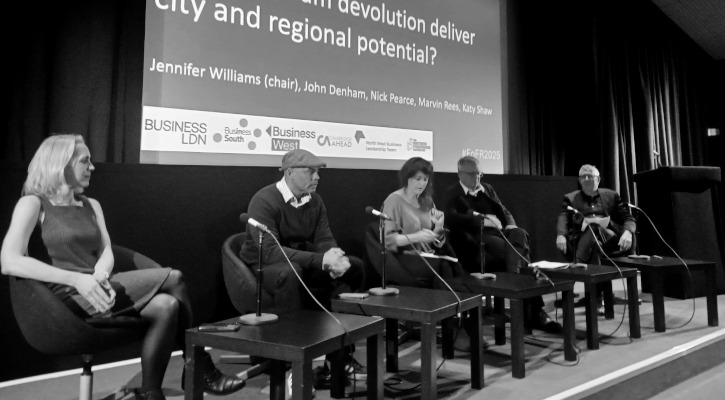
<p>We recently attended the Festival of Flourishing Regions 2025 (#FoFR2025).  The Festival aims to promote and celebrate the role that cities and regions play in the economy and prosperity of the country and look at how regions can drive the growth agenda of the government. Read Emma Harvey, CEO of Trinity Community Arts review of the event:</p>
<p>“At the heart of this week’s Festival of Flourishing Regions 2025 (#FoFR2025) at the Watershed was a recurring question: <i>Who truly benefits from growth?</i> Economic expansion and large-scale developments continue to bypass existing communities, leaving people clinging desperately to their sense of place, fearful of disruption. Nimby-naysayers, blocking our prosperity.</p>
<p>Bristol City Council leader Tony Dyer began with early reflections – and perhaps a warning – about the risks of growth without stability and prosperity without equity. He highlighted the need to shift toward <i>preventative public services </i>that operate proactively rather than merely reacting to crises. This was echoed by experiences of Stephen Peacock, the leader of the Combined Authority, who highlighted the real pressures of escalating expenditure on temporary accommodation hindering efforts to implement permanent solutions.</p>
<p>Palie Smart from the University of Bristol captured a key theme: <i>The power of powerful relationships… only when we get together can we tackle complex challenges.</i> But, how do we come together to build a vision for region that flourishes for us all when so many are paralysed by the continual threat of precariousness? As Andy Westwood surmised, <i>people are putting more in than they’re getting out”. </i>Why should any of us care about an empty promise of productivity when wealth accumulates at the top while wages stagnate in the middle and those at the bottom are propped up by a living wage that can’t keep pace with an out of control rental market? Why should  I care who’s in charge if power remains centralised and only deepens the majority’s sense of powerlessness? As Arrested Development’s lyrics go, <i>the word ‘cope’ and the word ‘change’ is directly opposite, not the same.</i></p>
<blockquote class="pullquote">"Citizens for Culture is an opportunity to do just that – in a region of rural and urban wealth and deprivation how do we build a shared identity, weaving and crafting an authentic narrative to define our place in the world." Emma Harvey</blockquote>
<p>If we want real progress, we need to move beyond survival and towards meaningful transformation.</p>
<p>Iain Gray spoke about the need for innovation and the importance of setting clear priorities and pursuing them ruthlessly and talked fondly of memories of the 2012 Olympics. While many remember this fondly for artistic ceremonies celebrating the best of British culture, I can’t help but think about what that ruthlessness looked like in reality; the permanent loss of century-old  covenanted land, the Manor Gardens allotments. I think about that and wonder, more than a decade on, do people still feel the benefits of that cement walkway in the same way as the communal land it replaced?</p>
<p>This tension between social mobility, productivity and asset-based community development ran through many discussions. Harriet Fear touched on the power of <i>new ideas in old buildings</i> with an example of a startup thriving in a former pigsty. It was a reminder that we overlook the value of what we already have we lose those in unusual corners and crevices where minds connect, imaginations are ignited and ideas are formed.</p>
<p>From public infrastructure projects, the much lambasted HS2 to regional funding pots and the constant churn of central government infrastructure funding pots locked needlessly to short-term political cycles. That churn of out with the old in with the new. 14 growth strategies in 16 years. Yet here we are, no closer to a solution that works for everyone.</p>
<p>Jim O’Neill places some of that blame at the foot of the merciless 247 news cycle that reduces everything to 15 seconds of infamy. As does former Bristol Mayor Marvin Rees who talked of the toxic trolling limiting our ability to attract and keep people even wanting to work in a political space.</p>
<p>With so much focus on productivity centred around, aerospace, tech, and defence, what actually makes a city like Bristol ‘sticky’ place people want to call home? It’s all about food and friends and gigs and carnivals and sound systems and heritage, and culture and and and…yet if it wasn’t for Katy Shaw who said, “c<i>ulture isn’t an add-on—it’s intrinsic to regional growth strategies”, </i>you’d be forgiven for thinking our route to happier healthier lives could be delivered by chips and wings and missile nose cones.</p>
<p>When mulling over our collective lot, we can all be too good at talking about what we don’t have. The poverty of capacity, devolved funding for culture that still remains fragmented, or the challenges in land use, where freehold sites are given away for developments never realised. <i>Using your powers wisely, </i>has never been more important. This tied directly into our work with partners to deliver <a href="https://www.trinitybristol.org.uk/about/news/latest-news/fill-in-our-survey" class="internal-link">Roots of Resilience</a>, which explores how community buildings can be leveraged by the voluntary sector to safeguard spaces, creating a holistic approach that blends the old with the new.</p>
<p>If we start from a place of what we<i> do </i>have – our wealth of talent, ideas skills, assets – as investment decisions shift to combined authorities – we can try to ensure that investment isn’t just about <i>top-down</i> economic development but enables communities to shape their own futures. As Nick Pearce spoke of the urgent need to structure <i>deliberative democratic processes as part of these devolved regions – </i>ensuring citizens have a direct say in how their regions evolve – I was bouncing out my seat ready to shout about our work to deliver the first regional Citizens’ Assembly for Culture, in September 2025 – giving people a stake in shaping the future of devolved investment in the creative and cultural industries.</p>
<p>In a fractured system where few understand how regional authorities operate, John Denham noted, rarely do we get a chance to sit down and ask, <i>what do we have in common?</i> Citizens for Culture is an opportunity to do just that – in a region of rural and urban wealth and deprivation how do we build a shared identity, weaving and crafting an authentic narrative to define our place in the world.</p>
<p>This isn’t about growth. It’s about betterment. Creating places where people can hope for more than just to survive. Where economic strategies don’t just serve a privileged few but create lasting, equitable prosperity.</p>
<p>The Festival of Flourishing Regions made it clear: the power to shape our future exists, but only if we have the courage to grab hold of it.”</p>
<p>Emma Harvey, CEO Trinity Community Arts</p>
<p>#FoFR2025</p>]]></content:encoded>
    <dc:publisher>No publisher</dc:publisher>
    <dc:creator>sarah</dc:creator>
    <dc:rights></dc:rights>
    
      <dc:subject>emma</dc:subject>
    
    
      <dc:subject>citizens for culture</dc:subject>
    
    <dc:date>2025-02-05T09:40:00Z</dc:date>
    <dc:type>News Item</dc:type>
  </item>


  <item rdf:about="https://www.trinitybristol.org.uk/contact/meet-the-team/emma/free-speech-wars-how-did-we-get-here-why-does-it-matter">
    <title>Free speech wars: How did we get here &amp; why does it matter?</title>
    <link>https://www.trinitybristol.org.uk/contact/meet-the-team/emma/free-speech-wars-how-did-we-get-here-why-does-it-matter</link>
    <description>Book of essays incl one by Team Trinity; diverse voices explore who gets to exercise free speech, what happens when powerful voices are challenged, and how free speech has been weaponised in various debates

</description>
    <content:encoded xmlns:content="http://purl.org/rss/1.0/modules/content/"><![CDATA[<p><em><a class="external-link" href="https://manchesteruniversitypress.co.uk/9781526151162/">The Free Speech Wars</a></em>, edited by Charlotte Lydia Riley and published by Manchester University Press (2020), is a collection of essays that examines the complexities and debates surrounding free speech in contemporary society.</p>
<p>The book features a co-written essay by Trinity team members <a href="https://www.trinitybristol.org.uk/contact/meet-the-team/emma" class="internal-link">Emma Harvey </a>and <a href="https://www.trinitybristol.org.uk/contact/meet-the-team/edson" class="internal-link">Dr Edson Burton</a> titled <i>In a diverse society, is freedom of speech realisable?</i></p>
<p>The pair discuss the challenges of balancing free speech with building safe and inclusive intersectional community spaces. They reflect on experiences where competing equality agendas have led to conflicts, highlighting the complexities faced by those managing public spaces in fostering open dialogue while ensuring inclusivity means just that.</p>
<p>The book brings together a diverse group of commentators, activists, and academics to explore who gets to exercise free speech, the consequences when powerful voices are challenged, and how free speech has been weaponised in various debates.</p>
<p>It delves into the spaces and structures of speech, such as mass media, universities, public events, political rallies, and the internet, and investigates how acts like censorship, boycotts, and protests have evolved historically and inform present discussions.</p>
<p>Other essays include:</p>
<p><strong>Gabriel Moshenska</strong>: <i>Anatomy of a 'trigger warning' scandal </i>Moshenska recounts a personal experience where his inclusion of content warnings in a course on the forensics of genocide and modern warfare became the centre of controversy and the broader context of academia and free speech</p>
<p><strong>Shaun McDaid &amp; Catherine McGlynn:</strong> <i>Free speech and preventing radicalisation in higher education</i> Examines the impact of the UK's Prevent duty on free speech within universities, advocating for its abolition, highlighting how the policy inadvertently suppresses legitimate discourse in higher education.</p>
<p><strong>Paul Whickman</strong>: <i>Teaching 'freedom of speech' freely </i>Whickman reflects on his experiences teaching literary censorship and free speech and discusses the importance of fostering a respectful and diverse environment to encourage open dialogue.</p>
<p>These essays, among others in the collection, provide nuanced perspectives on the multifaceted debates surrounding free speech, its limitations, and its implications in various societal contexts.</p>
<p class="callout"><a class="external-link" href="https://manchesteruniversitypress.co.uk/9781526151162/">The free speech wars</a>:  How did we get here and why does it matter? edited by Charlotte Lydia Riley is available to buy from Manchester Univeristy Press, £14.99</p>]]></content:encoded>
    <dc:publisher>No publisher</dc:publisher>
    <dc:creator>&lt;object object at 0x7f6a2148a580&gt;</dc:creator>
    <dc:rights></dc:rights>
    
      <dc:subject>edson</dc:subject>
    
    
      <dc:subject>emma</dc:subject>
    
    <dc:date>2020-11-30T09:20:00Z</dc:date>
    <dc:type>News Item</dc:type>
  </item>


  <item rdf:about="https://www.trinitybristol.org.uk/activities/jacobs-wells/news/podcast-how-to-save-a-community-building">
    <title>Podcast: How to Save a Community Building</title>
    <link>https://www.trinitybristol.org.uk/activities/jacobs-wells/news/podcast-how-to-save-a-community-building</link>
    <description>Trinity’s CEO Emma Harvey speaks with  Bristol Cable Editor, Priyanka Raval about what it takes to save our spaces</description>
    <content:encoded xmlns:content="http://purl.org/rss/1.0/modules/content/"><![CDATA[<p><img src="https://www.trinitybristol.org.uk/activities/jacobs-wells/news/fbf4f560ef7d11efbfccdf31b19992af.png/@@images/cf1527b1-6747-47a1-b519-caaea2eeee3a.png" alt="" class="image-inline" title="" /></p>
<p><strong>Podcast: <em>How to Save a Community Building – Insights from Trinity’s CEO Emma Harvey</em></strong></p>
<p>How do you bring a historic community building back into public hands? In this insightful podcast episode, Emma Harvey, CEO of Trinity in Bristol, shares a step-by-step account of what it really takes to save a civic asset; drawing on her leadership in the campaign to revive Jacobs Wells Baths.</p>
<p>From launching capital campaigns to navigating complex asset transfers, Emma breaks down the practical, political, and emotional aspects of community ownership. The conversation explores:</p>
<ul>
<li>
<p>Why community buildings matter — and what we lose when they're gone</p>
</li>
<li>
<p>How to build grassroots support and conduct meaningful local consultation</p>
</li>
<li>
<p>The value of phased fundraising and realistic feasibility studies</p>
</li>
<li>
<p>The role of local authorities, funders, and national policy in supporting asset transfer</p>
</li>
<li>
<p>Lessons learned and advice for others facing similar battles</p>
</li>
</ul>
<p>Whether you're a community organiser, policymaker, or curious citizen, this episode is packed with knowledge, encouragement, and a clear-eyed look at what it takes to protect the spaces that matter.</p>
<p>🕒 Runtime: ~50 minutes<br /> 📍 Featuring: Emma Harvey, CEO of Trinity, Bristol and Priyanka Raval, Editor, Bristol Cable</p>
<p><iframe frameborder="no" height="180" scrolling="no" src="https://share.transistor.fm/e/851d7ee1" width="100%"></iframe></p>
<p>If you liked this you can also listed to our <a class="external-link" href="https://www.bbc.co.uk/news/articles/c3w1p8n7y32o">BBC interview here</a>.</p>]]></content:encoded>
    <dc:publisher>No publisher</dc:publisher>
    <dc:creator>&lt;object object at 0x7f6a2148a580&gt;</dc:creator>
    <dc:rights></dc:rights>
    
      <dc:subject>emma</dc:subject>
    
    <dc:date>2025-05-23T10:20:00Z</dc:date>
    <dc:type>News Item</dc:type>
  </item>


  <item rdf:about="https://www.trinitybristol.org.uk/about/news/latest-news/we-dream-they-rule-1">
    <title>Opinion: We Dream, They Rule</title>
    <link>https://www.trinitybristol.org.uk/about/news/latest-news/we-dream-they-rule-1</link>
    <description>Off the back of the recent Kuumba ruling, CEO Emma Harvey reflects on what this means for how we manage our community spaces</description>
    <content:encoded xmlns:content="http://purl.org/rss/1.0/modules/content/"><![CDATA[<p class="BCX0 SCXW198613843 Paragraph"><img src="https://www.trinitybristol.org.uk/about/news/latest-news/Justice4Judah_19asMarkSimmons.jpg/@@images/57f2aa20-1409-48de-89f7-ea355ba2c19f.jpeg" alt="" class="image-inline" title="" /></p>
<p class="BCX0 SCXW198613843 Paragraph" style="text-align: right; "><i><span class="discreet">Justice4Judah campaign launch at the Kuumba Centre, 2017 ©MarkSimmons</span></i></p>
<p class="Paragraph SCXW198613843 BCX0"><span style="font-weight: bold; ">We Dream, They Rule: The Curious Case of Kuumba and the Call for Civic Change</span></p>
<blockquote class="pullquote"><span>"The relationship can’t be one of a parent and child that moves from the paternalistic to the parasitic, where we're ready to bur n it all to the ground when things go wrong. Instead, it needs to be symbiotic and reciprocal: a partnership where communities and institutions share responsibility, through both sunshine and rain." Anon</span></blockquote>
<p class="BCX0 SCXW198613843 Paragraph" style="text-align: left; ">This week, a civil ruling found in favour of the management committee of the St Pauls-based <a class="BCX0 SCXW198613843 Hyperlink" href="https://www.bristolpost.co.uk/news/bristol-news/trespassers-trustees-community-centre-wins-10440981" rel="noreferrer noopener" target="_blank">Kuumba Centre</a>, leaving the challenger and asset owners Bristol City Council red-faced and out of pocket.</p>
<p class="BCX0 SCXW198613843 Paragraph">The case highlights the complexities of managing community organisations and civic infrastructure. It sits against the national backdrop of We’re Right Here’s latest call to action: the Museum of Broken Dreams exhibition, which will bring to Parliament stories of community-led projects that could have transformed lives but were held back by bureaucracy and inflexible systems.</p>
<p class="BCX0 SCXW198613843 Paragraph">On the one hand, the judge’s decision to recognise the Kuumba committee as trustees can be seen as a win for the people; affirming the group’s legitimacy as those entrusted with the building’s guardianship. On the other, with that recognition comes the full weight of trustee-like duties, including accountability for how the site is managed and the consequences if it falls short. The ruling is both an important validation of community asset management and a reminder of the risks involved with safe and effective stewardship .</p>
<p class="BCX0 SCXW198613843 Paragraph">With councils across the UK unable and unwilling to manage buildings like these, it is left to volunteer groups who may lack the resources to deliver against expectations of communities and statutory bodies over time.</p>
<p class="BCX0 SCXW198613843 Paragraph">Accountability matters, but there is often a disconnect between what is expected vs what is realistic and achievable from all parties. Faced with perpetual scrutiny, community groups must work at pace to meet expectations around good governance, stable finances and impactful delivery, moving buckets to catch leaks, metaphorically and literally.</p>
<p class="BCX0 SCXW198613843 Paragraph">We all want well managed civic infrastructure that meets community needs and isn’t a burden on the public purse; the issue is how? How do we get what everyone wants? News flash. We can’t. Someone will always have to pay.</p>
<p class="BCX0 SCXW198613843 Paragraph"><strong>Councils pay.</strong> I am sure no one got into public service to take buildings off people. But with policies outdated, mechanisms slow, and processes inconsistent and overly bureaucratic, attempts to eliminate risk end up undermining the very community resilience we’d hope under-resourced administrations might want to support.</p>
<p class="BCX0 SCXW198613843 Paragraph">When funding is needed at the start of a project it’s rarely available. By the time things reach crisis point, funds are inevitably found and responses become heavy-handed, adversarial, and costly. Buildings sit in limbo and it’s not even clear who’s even responsible for figuring out what to do next. We always pay.</p>
<p class="BCX0 SCXW198613843 Paragraph"><strong>Communities pay.</strong> What starts out for most as a vision for something better. But anyone who has served on a community board knows that the realities are far more treacherous. From my earlier days in Bristol to some more recent experiences, the well-intentioned actions of those who want the best for their building can, over time, descend into disputes, factions and bitter rivalries.</p>
<p class="BCX0 SCXW198613843 Paragraph">Ineffective governance mechanisms chew up and spit out most, leaving spaces in the hands of a die-hard few who struggle under the cumulative effects of this way of working. Over time, this takes a toll: assets gradually decline, opportunities to make things better are missed and the goodwill that could’ve gone into building vibrant, thriving spaces is depleted. Nobody wins.  <br class="BCX0 SCXW198613843" /></p>
<p class="BCX0 SCXW198613843 Paragraph"><strong>And we pay. </strong>As we watch community leaders working tirelessly to keep buildings going, patching problems, navigating risk and jumping through hoops, we demand they do it backwards with high heels on. While councils struggle to balance budgets and meet statutory obligations, we shout, make FOI requests, caricature officers as the enemy, and treat capacity as an abstract concept rather than something finite and human.</p>
<p class="BCX0 SCXW198613843 Paragraph">The burden is on<i> them</i> surely, not<i> us</i>? We cry out for a fix as another building falls. We lament as problems that could have been solved with thousands escalate to millions. Our paternal government may dream up the latest national scheme funded by our taxes while we wait for it all to be put right by anyone by us. We walk past another boarded up space. Waiting. Wondering. In the end, we always pay.</p>
<p class="BCX0 SCXW198613843 Paragraph">As one trusted peer puts it, <i>"If we all pay in the end, then what’s our responsibility as communities? It’s not enough to be passive recipients. The relationship can’t be one of a parent and child that moves from the paternalistic to the parasitic, where we're ready to burn it all to the ground when things go wrong. Instead, it needs to be symbiotic and reciprocal: a partnership where communities and institutions share responsibility, through both sunshine and rain."</i></p>
<p class="BCX0 SCXW198613843 Paragraph">One size does not fit all. Every building, every neighbourhood, every group has its own story and reality. And because of that messy pluralism this means mistakes, failure, metamorphosis, rebirth. If the goal is to protect and sustain these vital spaces, we need a different approach. One rooted in partnership, trust and dialogue.</p>
<p class="BCX0 SCXW198613843 Paragraph">This isn’t just a Bristol issue. At its heart, it is about how we structure and what we expect from our public services: How do we find funds over time to sustain the long-term frameworks needed for communities to take on – and keep hold of – the land beneath our feet? How can we accept failure within that model, so that scrutiny needed today isn’t a barrier for anyone taking a chance on something akin to it tomorrow? Without wholesale change in both structure and expectations, every transfer is a sticking-plaster and any success in the now risks being a problem in the future as the world changes and we can’t keep up. In this, we are all vulnerable.</p>
<p class="BCX0 SCXW198613843 Paragraph">It’s time to stop upholding systems not designed with us in mind and instead commit to a new way of collaborative, forgiving, human centric thinking that allows our civic and cultural spaces to thrive.</p>
<p class="BCX0 SCXW198613843 Paragraph">This starts with us. All of us.</p>
<p class="BCX0 SCXW198613843 Paragraph"><i>This is an opinion piece by Emma Harvey, CEO</i></p>
<p class="callout"><strong>What you can do</strong></p>
<p class="callout"><strong>Locally</strong> Support Bristol’s <a href="https://www.trinitybristol.org.uk/about/news/latest-news/roots-of-resilience-report" class="BCX0 SCXW198613843 Hyperlink" rel="noreferrer noopener" target="_blank">Roots of Resilience </a>campaign - a network of Community Asset Organisations calling for a new framework: one that recognises the value of community assets not as liabilities on a balance sheet and places the council and communities as equitable partners in protecting our assets for the future. Write to your Councillor to ask them to support our recommendations.</p>
<p class="callout"><strong>Nationally</strong> Support We’re Right Here’s <a class="BCX0 SCXW198613843 Hyperlink" href="https://actionnetwork.org/letters/invite-your-mp-to-the-museum-of-broken-dreams/" rel="noreferrer noopener" target="_blank">Museum of Broken Dreams</a> campaign – they are asking you to write to your MP to invite them to an exhibition of community projects failed by bureaucracy and inflexible systems to coincide with the second reading of the English Devolution and Community Empowerment Bill. It is a last push for legislation that would shift power to local people and give communities the frameworks they need to take on and sustain vital assets.</p>]]></content:encoded>
    <dc:publisher>No publisher</dc:publisher>
    <dc:creator>&lt;object object at 0x7f6a2148a580&gt;</dc:creator>
    <dc:rights></dc:rights>
    
      <dc:subject>emma</dc:subject>
    
    <dc:date>2025-08-22T10:40:00Z</dc:date>
    <dc:type>News Item</dc:type>
  </item>


  <item rdf:about="https://www.trinitybristol.org.uk/about/news/2021/at-arms-length-in-arms-reach">
    <title>At arms length and in arms reach</title>
    <link>https://www.trinitybristol.org.uk/about/news/2021/at-arms-length-in-arms-reach</link>
    <description>Politics can be intrinsic to, whilst also remaining separate from, the work of charities</description>
    <content:encoded xmlns:content="http://purl.org/rss/1.0/modules/content/"><![CDATA[<p class="western" style="margin-bottom: 0cm; line-height: 138%; "><img src="https://www.trinitybristol.org.uk/about/news/2021/copy_of_image.png" alt="" class="image-inline" title="" /></p>
<p class="western" style="margin-bottom: 0cm; line-height: 138%; ">When Culture Secretary Oliver Dowden advised 25 of the UK’s most recognisable cultural institutions* <a class="external-link" href="https://www.thirdsector.co.uk/controversy-culture-secretary-looks-warn-charities-against-rewriting-british-history/governance/article/1707420">to be consistent with the Government on issues of contested heritage</a>, voices across heritage and the arts expressed a need for separation between culture and politics.</p>
<p class="western" style="margin-bottom: 0cm; line-height: 138%; ">But when charities faced calls from <a class="external-link" href="https://www.civilsociety.co.uk/news/charity-commission-chair-warns-charities-not-to-engage-in-culture-wars.html">Charity Commission Chair to remain apolitical</a> - a reaction to groups such as The National Trust opting to present the colonial history of some of their properties - the cultural sector was equally unhappy.</p>
<p class="western" style="margin-bottom: 0cm; line-height: 138%; ">This may appear contradictory; on the one hand, arts and heritage charities calling for state and art to be kept separate while at the same time bawking at being told to avoid politicising activity. Maybe artists aren’t that great at being told what to do. Or maybe politics can be intrinsic to, whilst also remaining separate from, the work of charities.</p>
<p class="western" style="margin-bottom: 0cm; line-height: 138%; "><strong>The work of charities is intrinsic to (small p) politics </strong></p>
<p class="western" style="margin-bottom: 0cm; line-height: 138%; ">Arts and heritage charities exist to enrich our understanding of the past and inspire the next generation to build a better future. These aren’t just fluffy-feels. Rather, they are legally defined principles, set out in what is known as ‘Charitable Objects’.</p>
<p class="western" style="margin-bottom: 0cm; line-height: 138%; ">Objects such as, ‘to preserve and promote heritage and arts’, ‘advance education’, or ‘promote equality of opportunity for persons of different racial and cultural identities’, can’t help but touch upon the micro-politics of everyday life.</p>
<p class="western" style="margin-bottom: 0cm; line-height: 138%; ">Objects exist to focus resources and give donors assurance funds will go toward furthering their chosen cause. When we give to charities, we put our trust in them to decide how to best use those resources in pursuit of the Objects.</p>
<p class="western" style="margin-bottom: 0cm; line-height: 138%; ">Funders may request charities use a hashtag in acknowledgement of funds or report on how funds are spent. But, this need for accountability does not take precedent over thee responsibility to stakeholders first and foremost.</p>
<p class="western" style="margin-bottom: 0cm; line-height: 138%; ">As independent legal entities, charities must remain free to decide what activities are most appropriate in pursuit of their Objects, for the good of those they serve. Charities cannot act against their legitimate Objects just to keep someone happy - even when that someone is the Culture Secretary, or the Charity Commission Chair.</p>
<p class="western" style="margin-bottom: 0cm; line-height: 138%; "><strong>Art and (capital P) Politics must be separate</strong></p>
<p class="western" style="margin-bottom: 0cm; line-height: 138%; ">When it comes to funding, this ‘at arms length’ principle is important for the autonomy of all charities and is particularly notable in UK culture, with creation of The Arts Council itself post-WWII to ensure a clear separation between culture and capital P Politics.</p>
<p class="western" style="margin-bottom: 0cm; line-height: 138%; ">This separation of Charity from State is critical as it safeguards the pursuit of a charity's mission from any shift in government priorities.</p>
<p class="western" style="margin-bottom: 0cm; line-height: 138%; ">It means charities can focus on the interests of those they serve rather than being distracted by the interests of those who fund them. They cannot de-prioritise stakeholder interests in the pursuit funds, even where those funds are administered by the Government or public funding bodies such as Lottery. They must be able to maintain their autonomy so they can flex and adapt to meet changing stakeholder needs - not least so they can ensure they remain relevant to an ever diversifying donor pool.</p>
<p class="western" style="margin-bottom: 0cm; line-height: 138%; ">Applying pressure on how legally constituted organisations pursue their legitimate charitable aims - by warning public funding will be ‘scrutinised’ should they not tow the line, for example - is even more problematic right now, due to the financial precariousness of the sector.</p>
<p class="western" style="margin-bottom: 0cm; line-height: 138%; ">Charities exist to make change and pursue activities that help to make life fairer for us all. To use Chris Whitty’s ‘Swiss-cheese’ analogy, they plug any gaps in the wider public sector safety-net. We must protect this freedom at all costs, so charities can respond to the disproportionate impact of the pandemic, amplify stories that give new perspectives to dominant narratives and ensure the art we make remains free from Political constraints.</p>
<p class="western" style="margin-bottom: 0cm; line-height: 138%; "><span style="font-weight: normal; ">Our charities, our</span><span style="font-weight: normal; "> heritage and </span><span style="font-weight: normal; ">our </span><span style="font-weight: normal; ">culture </span><span style="font-weight: normal; ">must remain</span><span style="font-weight: normal; "> independent</span><span style="font-weight: normal; ">. </span><span style="font-weight: normal; ">That</span><span style="font-weight: normal; "> f</span><span style="font-weight: normal; ">reedom</span><span style="font-weight: normal; "> is</span><span style="font-weight: normal; "> more </span><span style="font-weight: normal; ">important</span><span style="font-weight: normal; "> than ever, </span>for the sake of our collective recovery and prosperity. We must distinguish between the Politics to be kept <span style="font-weight: normal; ">at arms length and </span><span style="font-weight: normal; ">that which is central to</span><span style="font-weight: normal; "> our mission if want our vision to remain in arms reach.</span></p>
<p class="western" style="margin-bottom: 0cm; line-height: 138%; "><i>By Emma Harvey, CEO</i></p>
<p><strong>Seven ways to show solidarity</strong></p>
<ol>
<li>Support the work groups diversifying the sector, such as <a class="external-link" href="http://migrantsinculture.com">Migrants in Culture</a> and <a class="external-link" href="https://incarts.uk/">Inc Arts</a></li>
<li>Sign Howell Furber 's petition to encourage <a class="external-link" href="https://www.change.org/p/oliver-dowden-open-letter-to-oliver-dowden-reconsider-your-stance-on-contested-histories/psf/promote_or_share?guest=existing&amp;short_display_name=Emma&amp;recruiter=&amp;source_location=react-fe"><span style="font-weight: normal; ">to reconsider DCMS</span></a><span class="external-link">' <span style="font-weight: normal; ">stance on contested histories</span></span></li>
<li>Follow news about the Hands Off Our Heritage <a class="external-link" href="https://twitter.com/danaksegal/status/1363851251000242179">on social media</a> </li>
<li>Sign up to <a href="https://strikealightfestival.us7.list-manage.com/subscribe?u=9f1196f4f902123320fdfdd70&amp;id=7f5472d813">Strike A Light's mailing list</a> to be part of future cross-sector conversations</li>
<li>Join <a class="external-link" href="https://www.museumsassociation.org/campaigns/decolonising-museums/"><span style="font-weight: normal; ">The Museums Association's campaign</span></a> to decolonise museums</li>
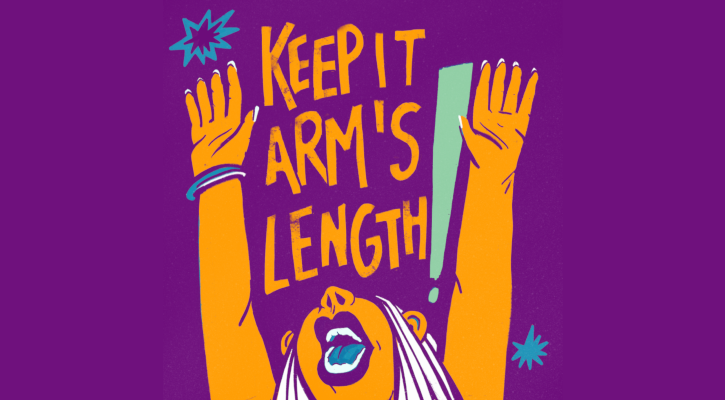
<li><a class="external-link" href="https://members.parliament.uk/FindYourMP">Write to your MP</a> in support of a 'Keep At Arms Length' approach to UK culture</li>
<li>Show your support on social media to those such as <a class="external-link" href="http://twitter.com/nationaltrust">@nationaltrust</a> and other UK arts and heritage charities impacted*, using hashtags such as #KeepItArmsLength #HandsOffOurHeritage</li>
</ol>
<p><span class="discreet">*List of organisations:</span><span class="discreet"> The British Film Institute, British Library, </span><span class="discreet">British Museum, </span><span class="discreet">Churches Conservation Trust, </span><span class="discreet">Historic Royal Palaces, </span><span class="discreet">Horniman Museum, </span><span class="discreet">Imperial War Museum, </span><span class="discreet">Museum of the Home, </span><span class="discreet">National Archives, </span><span class="discreet">National Gallery, </span><span class="discreet">National Museums Liverpool, </span><span class="discreet">National Portrait Gallery, </span><span class="discreet">Natural History Museum, </span><span class="discreet">Royal Armouries, </span><span class="discreet">Royal Museums Greenwich, </span><span class="discreet">Royal Parks, </span><span class="discreet">Science Museum Group, </span><span class="discreet">Sir John Soane’s Museum, </span><span class="discreet">Tate Gallery, </span><span class="discreet">V&amp;A Museum, </span><span class="discreet">Wallace Collection, </span><span class="discreet">Arts Council England, </span><span class="discreet">Historic England, </span><span class="discreet">National Lottery Communities Fund, </span><span class="discreet">National Lottery Heritage Fund</span></p>
<ol> </ol> <ol> </ol>]]></content:encoded>
    <dc:publisher>No publisher</dc:publisher>
    <dc:creator>&lt;object object at 0x7f6a2148a580&gt;</dc:creator>
    <dc:rights></dc:rights>
    
      <dc:subject>emma</dc:subject>
    
    
      <dc:subject>trinity</dc:subject>
    
    
      <dc:subject>community</dc:subject>
    
    <dc:date>2021-02-25T00:00:00Z</dc:date>
    <dc:type>News Item</dc:type>
  </item>


  <item rdf:about="https://www.trinitybristol.org.uk/activities/music-youth/news/diversifying-the-workforce-one-job-at-a-time">
    <title>Diversifying the workforce, one job at a time</title>
    <link>https://www.trinitybristol.org.uk/activities/music-youth/news/diversifying-the-workforce-one-job-at-a-time</link>
    <description>With the DWP's announcement of their Kickstart Scheme, Trinity explores what such jobs might mean for the Creative industries</description>
    <content:encoded xmlns:content="http://purl.org/rss/1.0/modules/content/"><![CDATA[<p><img src="https://www.trinitybristol.org.uk/activities/music-youth/news/TrinityMakingTracksYouthMusicSectorDevelopmentDay.JPG" alt="Trinity Centre Youth Music Bristol " class="image-inline" title="Trinity Centre Youth Music Bristol " /></p>
<p><span class="discreet">Students and professionals take part in a Making Tracks sector sharing day. <a href="https://www.trinitybristol.org.uk/activities/music-youth" class="internal-link">Making Tracks</a> is a  life changing music making project delivered by us, in partnership with leading youth services providers Basement Studios and ACE. Photo Paul Blakemore</span></p>
<p><strong> With the DWP's announcement of the Kickstart Scheme, Trinity explores what such jobs might mean for the Creative industries</strong></p>
<p>People from lower socio-economic backgrounds make up just 12% of the workforce in the creative industries, despite being 44% of the UK population and the Creative Industries Federation highlight the inherent inequality within the creative and cultural workforce across almost every protected characteristic.<br />Covid-19 will mean high unemployment for young people, as well as having profound impact on the cultural and creative industries.Diversifying the creative industries remains high on the agenda with the Creative Industries Federation citing lack of diversity still a persistent failing across the sector.</p>
<p><strong>Possible redundancies may only serve to harm representation through the loss of junior workforce.</strong></p>
<p>At a time when we need to do more to create alternative pathways, the challenge has been compounded by the pandemic with more experienced people willing to volunteer time or remain in lower-paid roles and less job-mobility at senior or executive level.</p>
<p>The announcement of more detail about the Government's Kickstart Scheme in September 2020 offers some hope - with opportunities created for paid employment for unemployed 18-24yr olds.</p>
<p>But it is by no means a magic bullet and must be accompanied by strong youth provision to ensure that those who stand to gain most from such placements are given every opportunity to access and succeed in any roles created.</p>
<p>Though many will know Trinity as one of the most loved and iconic music venues in the city, what many don't know is that Trinity has delivered youth arts training since 2005, providing creative courses for young people, with a focus on working with those Not in Education Employment or Training (NEET), in partnership with Education Unlimited, City of Bristol College, Weston College, as well as Bristol’s wider youth sector.</p>
<p><strong>Personal development through creative expression can be a critical factor in a young person's success.</strong></p>
<p>Since 2018 we have led a <a href="https://www.trinitybristol.org.uk/activities/music-youth" class="internal-link">Youth Music funded consortia</a> with Basement Studio and Aspiration Creation Elevation working with 250 young people from challenging circumstances annually, giving them a chance to realise their potential through participation in arts and culture, giving access to free music-making which has truly been a life-changing opportunity for those who come through our doors.</p>
<p>Through our a decade of delivery, we are now part of a network of specialist providers who support with referrals, pastoral care and progression. Being part of this network who work to support the needs of NEET young people is a combined effort it is clear that, in most cases, multiple cross-sector agencies are involved in supporting a young person on their journey. The success of Kickstart in really changing the lives of those who need this chance the most rests on the ability to mobilise a cross-sector approach and support employers to help them realise the potential of a diverse young workforce.</p>
<p>Trinity has been part of a number of youth education and employment schemes historically, including The Future Job Fund, cited by NIESR as one of the most successful back-to-work schemes in history. Schemes such as FJF and the Creative Employment Programme have meant that we have been able to provide 33 young people aged 18-24 through with paid-internships since 2009, providing alternative pathways into creative industries.</p>
<p>Though not always perfect, they show us that <strong>this investment can provide a critical pathway into the creative workforce</strong> - over 1/4 of young people taken on via an internship remained employed at Trinity beyond the grant-funded post, including our Venue Manager Jamell, who started with us in 2010 on a 6mth FJF placement.</p>
<p><a href="https://www.trinitybristol.org.uk/activities/music-youth/news/jamells-story" class="internal-link">Read more about Jamell's story, here.</a></p>]]></content:encoded>
    <dc:publisher>No publisher</dc:publisher>
    <dc:creator>&lt;object object at 0x7f6a2148a580&gt;</dc:creator>
    <dc:rights></dc:rights>
    
      <dc:subject>emma</dc:subject>
    
    
      <dc:subject>young people</dc:subject>
    
    
      <dc:subject>trinity</dc:subject>
    
    <dc:date>2020-09-15T12:55:00Z</dc:date>
    <dc:type>News Item</dc:type>
  </item>


  <item rdf:about="https://www.trinitybristol.org.uk/contact/meet-the-team/emma/in-memoriam-phil-a-story-of-change">
    <title>In memoriam: Phil, a story of change</title>
    <link>https://www.trinitybristol.org.uk/contact/meet-the-team/emma/in-memoriam-phil-a-story-of-change</link>
    <description>A tribute to Phil, 1948-2020

</description>
    <content:encoded xmlns:content="http://purl.org/rss/1.0/modules/content/"><![CDATA[<p><img src="https://www.trinitybristol.org.uk/contact/meet-the-team/emma/Poppy.JPG/@@images/5145ed74-7f36-42f3-b62d-a710d92ae844.jpeg" alt="" class="image-inline" title="" /></p>
<p> </p>
<p>
<header>
<p class="documentFirstHeading" style="text-align: right; "><i><span class="discreet">Phil's dog Poppy was a regular feature in the building</span></i></p>
<p class="documentFirstHeading" style="text-align: left; "><strong><i> </i>A tribute to Phil, 1948-2020</strong></p>
<p class="documentFirstHeading" style="text-align: left; "><strong> </strong>To reflect on a journey like Phil’s is to take a momentary glimpse at a life of many parts, including parts lost or hidden, or not ours to tell. The parts I know include parts that are difficult, also parts where I don’t recognise much of the man I knew. Phil was a complex, layered person. It was not that he shied away from his past, he just didn’t want to bestow the weight of it onto others.</p>
</header>
</p>
<p class="western">In life, we chase rainbows. In death, we want something much simpler. Our own salvation or damnation dependent on the compatibility of our relative goodness to those who mourn our passing. Making saints of those held close and casting aside the sinners, though the space between is the one most of us occupy. Society depends on us all trying to be the best versions of ourselves. Our crimes are committed in the moments where we forget to try. It’s those who touch the extremities of expected behaviour -both good and bad - who create the most ripples.</p>
<p class="western">Phil served 13 years in prison for a devastating crime. He came to Trinity in 2004 on a <a href="https://www.trinitybristol.org.uk/about/renovation/news/ex-offenders" class="internal-link">back-to-work ex-offender placement</a>.</p>
<blockquote class="pullquote">Sometimes there can be no forgiveness. But, in that space between life and death is where we find community. A space for the misfits and the troubled. Beyond the warmth of our family and our friends, a sense of belonging that is unconditional.</blockquote>
<blockquote class="pullquote">Emma Harvey, CEO</blockquote>
<p class="western">It was just a shabby shell back then, after a period of closure that many thought would mark its end. A re-imagining, but without any of the resources needed to realise that vision.</p>
<p class="western">Phil offered us a lifeline. Without him, the building could never have reopened. Nor could it have remained open during those early years, when so much manual work needed doing in order to make it a safe space.</p>
<p class="western">On Phil’s release, he continued to work at Trinity for no financial or personal gain. He did so much and grafted in a way that was unimaginable. It was his dedication and determination that inspired everyone who met him in those times. Others would try to emulate it, but we’d all be in bed crashed out at a time when he was up and about, working on setting things right so we could open our doors the next day.</p>
<p class="western">His atonement laid the foundation stone of Trinity today. So many times, he managed to help us pull something unrealistic out of the bag and make the magic happen. His work ethic at times seemed superhuman and pushed him to breaking on several occasions. He was so stubborn in his dissent from that ladder, when it came to his retirement in 2016.</p>
<p class="western">With his cynicism, it was like he hated all that busyness and insanity that gave the place life. When the lock-down started, the team joked that this was the Trinity Phil had always wanted. A quiet space with no people and the building all to himself. But, that was his trick on us - he loved the building’s life, he just never felt that he deserved to be a part of it.</p>
<p class="western"> </p>
<p class="western">During the Phil years, to walk in and see a weathered old man followed by his faithful hound, you just knew you had found somewhere where you could just be in spite of, not because of, your past self or any future expectations.</p>
<p class="western">Trinity made him feel something in a space someone more poetic might call his heart. He felt enough of a sense of being part of the wonderment though just by being in the background as He who was both church care taker and care giver, whilst never permitting himself to fully become immersed.</p>
<p class="western">For those who Phil hurt most - as for any victim of crime and their families - the worst thing to have is that sense of the perpetrator’s life being allowed to continue. The fear and anger that they are somehow able to enjoy that which they have taken from their victim. That they get to feel the warmth of the sun on their face.</p>
<p class="western">The reality is much more complex. Even in our most joyous of times, Phil never basked in that sunshine. There was no absolution, just resolution and resignedness to a life in the shade. To paraphrase Indigo Girls (a band he loved) even if his sweat smelt clean, the glare off the sun would hurt his eyes.</p>
<p class="western"> </p>
<p class="western">Father. Husband. Functioning alcoholic. A mask that began to slip more and more with the passing of time. But, what never changed was a deep warmth and an unwavering loyalty beyond reason. Humour in the face of adversity. Cigarettes with Steve when there was nothing else. Amongst the glimpses of joy - guitars and fish and chips and T-shirts and Poppy - there were subsequent losses and drinking alone and fear and loneliness. Life meant life.</p>
<p class="western">Love. There was so much love and hurt over past wrongs so damaging that they can never be set right, no matter how virtuous any subsequent action. Nevertheless, he was deeply loved by his Trinity family. We reflect on the life of a person who touched and changed lives dramatically and catastrophically. We respectfully mourn and pay tribute to a one of a kind man who inspired us to work hard and do better, knowing he could never be forgiven.</p>
<p class="western">Sometimes there can be no forgiveness. But, in that space between life and death is where we find community. A space for the misfits and the troubled. Beyond the warmth of our family and our friends, a sense of belonging that is unconditional.</p>
<p class="western">That he has passed during such particularly challenging times gives us greater cause for reflection. If a criminal can become such an outstanding citizen then we can hold onto hope that good grows out of even the most darkest of moments. That one might work toward a better future they might not be part of, but which still very much exists because of the part they played.</p>
<p class="western">Restoration if not of a soul, at least of a building that is still very much here. A space for love, life, death and reincarnation. A place of radical inclusiveness, helping us to see that grace extended - even if it is felt to be undeserved - can take us all to somewhere better.</p>
<p class="western">Phil. A reminder that who we are at any one moment does not define us. After all, we can always choose to change ourselves.</p>
<p class="western">Big love always</p>
<p class="western">Emma x</p>]]></content:encoded>
    <dc:publisher>No publisher</dc:publisher>
    <dc:creator>&lt;object object at 0x7f6a2148a580&gt;</dc:creator>
    <dc:rights></dc:rights>
    
      <dc:subject>emma</dc:subject>
    
    <dc:date>2020-08-11T00:00:00Z</dc:date>
    <dc:type>News Item</dc:type>
  </item>


  <item rdf:about="https://www.trinitybristol.org.uk/about/news/latest-news/becoming-legends-in-our-own-time-fighting-for-community-ownership">
    <title>Becoming Legends in Our Own Time: Fighting for Community Ownership</title>
    <link>https://www.trinitybristol.org.uk/about/news/latest-news/becoming-legends-in-our-own-time-fighting-for-community-ownership</link>
    <description>Opinion piece by CEO Emma Harvey on the fight for community ownership in England, why the current system stacks the odds against local groups, and what we can do about it</description>
    <content:encoded xmlns:content="http://purl.org/rss/1.0/modules/content/"><![CDATA[<p class="mceContentBody documentContent"><img src="https://www.trinitybristol.org.uk/about/news/latest-news/a70918aec1db409ab29f2a13cecf0968.jpg/@@images/e6457cdb-c53e-4360-8df8-9ef88ac09bb9.jpeg" alt="" class="image-inline" title="" /></p>
<p class="mceContentBody documentContent" style="text-align: right; "><i><span class="discreet">John Parish &amp; Adrian Utley supporting Trinity's #Notes4Notes campaign, 2013</span></i></p>
<p class="mceContentBody documentContent" style="text-align: left; "><i> </i><span style="font-weight: bold; ">The battle over who gets a say about the land under our feet is a tale as age-old as Robin Hood.</span></p>
<p>As the housing crisis shows no sign of letting up, this can mask the much wider picture of what it truly means to build sustainable, thriving neighbourhoods where people want to carve out lives. Despite the government’s stated commitment to community empowerment, the closure of the Community Ownership Fund (COF) marks a significant setback leaving the future of community-led asset ownership uncertain.</p>
<p>Even with schemes like COF, the task of taking on a building is one with many obstacles. In England’s fight for community spaces, the Asset of Community Value (ACV) system, while noble in its intention, offers little protection against the weight of market forces. Unlike Scotland’s Community Right to Buy, which grants legal power to force a sale to qualifying community interest groups, England’s system merely offers a temporary pause on commercial disposal, with no obligation placed on asset owners to prioritise community buyers.</p>
<p>This leaves communities having to balance professionalism needed to lever required funds whilst simultaneously growing noisy public campaigns to put of other buyers. If they’re in no rush to sell, the owner will simply wait for the six-month moratorium to lapse before proceeding with sale to the highest bidder, as with Coexist’s campaign to save Hamilton House. Even where groups manage to raise substantial funds and deliver successful public campaign, efforts can be swept aside in a heartbeat by a developer with deeper pockets.</p>
<p>There is marginally greater hope when a building is owned by a Local Authority, where campaigners can cite continued social value. However, securing a community asset transfer can be challenging in the current context with councils under pressure to balance deficit budgets. The temptation of commercial disposal can be hard to resist.</p>
<p>Keeping buildings in public ownership is one of the biggest challenges. Many councils are eager for a quick exit from liabilities such as their expensive portfolio of rapidly dilapidating buildings. By the time an asset reaches a state of severe disrepair, disposal becomes the only logical option; a short-term fix that plugs a budget gap at the expense of long-term social, economic, and health benefits.</p>
<p>People think of the legend of Robin Hood as a story of outlaws robbing the rich, but at its core, it is a tale of defiance against this type of land-based power. The struggle to protect or reclaim what belongs to the people – whether it’s indigenous land reclamation struggles against tech giants mining for precious minerals, tenant unions resisting evictions and rent hikes, community land trusts securing affordable housing, local campaigns fighting to save a building on their doorstep, or even Greenland telling Trump “no means no” – is a narrative deeply rooted in our human condition, local to global.</p>
<p>In this latest telling of the story, we’re not just saving buildings. We’re saving ourselves. Every step we take to save a space is an act of political defiance, challenging the systems that concentrate land and wealth in fewer hands. Community management of buildings unlocks external funding, supports local well-being, and keeps spaces in public hands. It is in these everyday battles to save our spaces that the greatest transformations are forged, proving that resilience, solidarity, and vision to reshape a future in which communities work together to solve some of our shared problems.</p>
<p>Like Robin Hood’s battle against feudal land grabs, the movement for community ownership is about more than individual buildings, it’s about reshaping an entire system. If we only defend one asset at a time, we won’t keep up with the pace of change and we’ll fail to address the structural inequality that means some the odds are stacked against some more than others. Instead, we must challenge the structures that keep land and power concentrated among the few.</p>
<p align="left" class="western">Rather than accepting when our decision-makers tell us the cupboards are bare, we need to all be asking more questions of our elected representatives to demand greater transparency around how we’re making best us of the resources we do have.  The question isn’t just: <em>How can we save this building?</em> It’s: <em>How can we reclaim control over the places that shape our lives, for the good of all of us?</em></p>
<p align="left" class="western" style="line-height: 115%; "><em>Opinion piece written by Emma Harvey, CEO</em></p>
<h3><strong>How to help</strong></h3>
<p><strong><a class="external-link" href="https://www.bristol.gov.uk/residents/people-and-communities/community-centres-and-facilities/community-right-to-bid">Register a building</a> as an Asset of Community Value (ACV); </strong>this gives your community the right to bid for it if it's put up for sale, helping to protect important local spaces from unwanted development or loss.</p>
<p><strong><a href="https://www.trinitybristol.org.uk/about/news/latest-news/roots-of-reslience" class="internal-link">Read about</a> our Roots of Resilience campaign; </strong>show your support by contacting your Local Councillor to tell them about the importance of civic and cultural spaces in your neighbourhood.</p>
<p><strong><a class="external-link" href="https://historicengland.org.uk/listing/protect-historic-places/apply-for-listing/#:~:text=Sign%20in%20and%20use%20the,that%20appear%20on%20the%20NHLE.">Nominate a building </a>to be listed as a heritage asset; </strong>care about the future of a historic place you know and love? Anyone can recommend a building, site, monument, designed landscape, battlefield or wreck site for inclusion on the National Heritage List for England (NHLE).</p>
<p><strong><a class="external-link" href="https://members.parliament.uk/FindYourMP">Write to your MP</a></strong> to call for a UK-wide "Community Right to Buy" to enable communities to take ownership of local assets, along with other measures like a new flexible Community Ownership Fund and support for community businesses to help combat structural inequity in asset management.</p>
<p class="callout" style="text-align: left; "><span style="font-weight: bold; ">...and don't forget to VOTE 1st May! </span>The West of England Mayor has the power to shape investment in civic and cultural infrastructure across the region. This election is a crucial chance to ensure decisions are made that benefit <strong>all</strong> of us. Don't forget to use your power to vote and make sure you <strong>ask your candidates what will they do to ensure investment reaches local communities so they can take on and develop vital community assets.</strong></p>
<h3><span style="font-weight: bold; ">Resources</span></h3>
<p><strong>Ask your local Councillor:</strong></p>
<ol>
<li>How is the council prioritizsng and funding investment in community assets, and what opportunities exist for community partnerships or asset transfers?</li>
<li>Are there underused or surplus council properties that could be repurposed for community benefit, and what funding mechanisms (e.g., CIL, Section 106) can be utlised to better support this model?</li>
</ol>
<p><span style="font-weight: bold; ">Ask your local MP:</span></p>
<ol>
<li>Will the government introduce stronger legal protections, such as a Right to Buy or compulsory purchase powers for communities, to prevent vital spaces from being lost to private development?</li>
<li>Will the government commit to establishing a dedicated, long-term funding programme like Scotland’s Land Fund, to better enable communities to protect the assets that matter to them?</li>
</ol>
<p><span style="font-weight: bold; "> </span></p>
<p align="left" class="western"><strong>Links:</strong></p>
<p align="left"><a href="https://locality.org.uk/">Locality</a> - Provides expert guidance and resources for community-led organizations to establish and sustain community assets.</p>
<p align="left"><a href="https://mycommunity.org.uk/">My Community</a> - Provides tools and advice for communities to take ownership of local assets and influence local decision-making.</p>
<p align="left"><a href="https://www.platformplaces.com/">Platform Places</a> - Assists communities in repurposing vacant or underused buildings into vibrant community spaces.</p>
<p align="left"><a href="https://www.sharedassets.org.uk/">Shared Assets</a> - Offers support for managing land and buildings as sustainable community resources.</p>
<p align="left"><a href="https://www.stirtoaction.com/">Stir to Action</a> - Delivers training and workshops focused on social enterprise and community-led development.</p>
<p align="left"><a href="https://plunkett.co.uk/">The Plunkett Foundation</a> - Supports rural communities in setting up and running community-owned businesses, including buildings.</p>
<p align="left"><a href="https://voscur.org/">Voscur</a> - Offers support services for voluntary and community groups in Bristol, including guidance on managing community buildings.</p>
<p style="text-align: center; ">#WECA #WestOfEngland #MyVoteMyVoice #UseYourVote</p>
<p style="text-align: center; ">#CommunityPower #SaveOurSpaces #SoldFromUnderYou</p>
<div id="_mcePaste" style="width: 1px;">
<div></div>
</div>]]></content:encoded>
    <dc:publisher>No publisher</dc:publisher>
    <dc:creator>&lt;object object at 0x7f6a2148a580&gt;</dc:creator>
    <dc:rights></dc:rights>
    
      <dc:subject>emma</dc:subject>
    
    <dc:date>2025-04-01T16:05:00Z</dc:date>
    <dc:type>News Item</dc:type>
  </item>


  <item rdf:about="https://www.trinitybristol.org.uk/about/news/latest-news/the-plebs-are-revolting">
    <title>Opinion:The plebs are revolting!</title>
    <link>https://www.trinitybristol.org.uk/about/news/latest-news/the-plebs-are-revolting</link>
    <description>Why the route to reconnecting with audiences (and voters) might include citizens assemblies</description>
    <content:encoded xmlns:content="http://purl.org/rss/1.0/modules/content/"><![CDATA[<p class="western" style="line-height: 100%; margin-bottom: 0cm; text-align: right; "><img src="https://www.trinitybristol.org.uk/about/news/latest-news/alastairbrookeskolabstudios_trinitynewtownmural_2024_005.jpg/@@images/cf27aebf-e748-4682-8bdb-d9b8a7bb8e50.jpeg" alt="" class="image-inline" title="" /></p>
<p class="western" style="line-height: 100%; margin-bottom: 0cm; text-align: right; "><i><span class="discreet">Newtown mural making, image by Alistair Brookes</span></i></p>
<p align="left" class="western" style="line-height: 100%; margin-bottom: 0cm; "><strong>Why the </strong><strong>route </strong><strong>to reconnecting with audiences (and voters) might include citizens assemblies</strong></p>
<p align="left" class="western">This week, the National Gallery announced their new five-year plan to embed a citizens assembly as part of their decision making structure. This was followed by<i> </i>Melanie McDonagh’s<i> </i>Evening Standard piece (swiftly edited but originally titled, <span style="text-decoration: underline;"><a href="https://www.standard.co.uk/comment/national-gallery-curate-citizens-assembly-b1241445.html"><i>I'm sorry, but plebs shouldn't be curating the National Gallery</i></a></span><span style="text-decoration: underline;">)</span> making the case for the Gallery’s direction to continue to be decided - as it has been for the best part of two centuries - by <i>the appointed experts who know and care about art and who know what it is they want the rest of us to engage with.</i></p>
<p align="left" class="western">Scepticism about the unfamiliar is expected. When <span style="text-decoration: underline;"><a href="https://citizensforculture.info/">Citizens for Culture</a></span> started with a notion to embed citizen decision making in cultural strategic thinking in The West of England Region, I was both optimistic and wary. As we embarked on a citizen-led design stage, I expected to meet a bunch of citicynics wondering why we were asking them about culture when - from cost of living to global conflict - there were bigger fish to fry. I was instead met with engaged thoughtfulness and a unique bredth of cultural perspective that reinvigorated my enthusiasm about what a citizens assembly could offer to the arts.</p>
<p align="left" class="western">It is not news to anyone that our sector is in crisis. Costs have gone up whilst funding has, at best for many, remained static. With public sector investment declining as statutory obligations grow, the UK's cultural sector once again grasps for an idea of sustainability that moves ever further from reach.</p>
<p align="left" class="western">People more used to getting their voices heard may want to keep things as they were, but business as usual is no longer an option. Post-pandemic visitor numbers are down as curators scratch their heads wondering why their engagement team have failed to get the bums on their seats. Decolonising themes intended to reach diverse audiences can miss the mark if they only retell old stories through old structures.</p>
<p align="left" class="western">Just as our traditional two party politicking needs a rethink, so too do the structures that underpin our creative industries that - as well as many other key industries from the civil service to our judicial system - are significantly lacking in working-class representation.</p>
<p align="left" class="western">Columnists with platforms may have no interest in taking part, but that sentiment is not shared. Polling of Reform voters shows <a href="https://londonlovesbusiness.com/replacing-the-house-of-lords-with-a-citizens-assembly-would-increase-their-trust-in-politics/">replacing the House of Lords with a citizens assembly would increase their trust in politics</a>. With visitor numbers for many cultural institutions failing to pick back up to pre-pandemic levels, ignoring us plebs is costly.</p>
<p align="left" class="western">Consulting communities can miss the mark either because the right questions weren’t asked or space was not made for unexpected answers. Yes, we’re all biased and opinionated. We're also your audiences, your electorate your customers and (hopefully) your future employees. The more we cling to decision making models that don’t account for that spectrum of voice and opinion, the more we'll continue to decline.</p>
<p align="left" class="western">Assemblies may not give us all the answers, but they allow for deeper conversations about who we are and how we want to be governed, washed or unwashed. In a global network of online communities and distributed narratives, they can help to covert that which is reductive and disperate into a shared course of action, that gives us at least that bit of hope to catalyse change.</p>
<p align="left" class="western">This is the model pioneered by Nottingham’s <a href="https://www.nae.org.uk/voice/">New Art Exchange,</a> which has shifted the balance of power from one that is top down to one where their citizens assembly embedded in their structural governance. Participation isn’t forced. It is paid. Assembly members aren’t expected to replace the expertise of staff. They’re there to bring relevancy and meaning, with a board that continues to govern risk and a creative, curatorial crew who bring their relevant skills and specialisms to convert, elevate and actualise ideas. Artistic expertise isn’t being superseded, it's being enhanced through the power of that collective lens.</p>
<p align="left" class="western">The UK’s spectrum of heritage, identity and opinion is so broad, the idea that any one person could curate that in isolation is for the dinosaurs. Deciding together might feel messy but, as the models we know are failing us, assemblies give us a way to realise a kaleidoscope of possibility. We have an opportunity to start that decision making process from a different point, even if we’re not sure where we might end up. Will citizens assemblies solve our problems? I don’t know. I do know in an era of decentralised content and political discontent we are both our own curators and our best advocates.</p>
<p align="left" class="western">We ignore that at our peril.</p>
<p align="left" class="western"><i><span class="discreet">This is a personal opinion piece by <a href="https://www.trinitybristol.org.uk/contact/meet-the-team/emma" class="internal-link">Emma Harvey</a></span></i></p>]]></content:encoded>
    <dc:publisher>No publisher</dc:publisher>
    <dc:creator>&lt;object object at 0x7f6a2148a580&gt;</dc:creator>
    <dc:rights></dc:rights>
    
      <dc:subject>emma</dc:subject>
    
    <dc:date>2025-08-06T12:35:00Z</dc:date>
    <dc:type>News Item</dc:type>
  </item>


</rdf:RDF>