<?xml version="1.0" encoding="utf-8" ?>
<rdf:RDF xmlns:rdf="http://www.w3.org/1999/02/22-rdf-syntax-ns#" xmlns:dc="http://purl.org/dc/elements/1.1/" xmlns:syn="http://purl.org/rss/1.0/modules/syndication/" xmlns="http://purl.org/rss/1.0/">


<channel rdf:about="https://www.trinitybristol.org.uk/search_rss">
  <title>Trinity Community Arts</title>
  <link>https://www.trinitybristol.org.uk</link>

  <description>
    
            These are the search results for the query, showing results 11 to 15.
        
  </description>


  <image rdf:resource="https://www.trinitybristol.org.uk/logo.png"/>

  <items>
    <rdf:Seq>
      
        <rdf:li rdf:resource="https://www.trinitybristol.org.uk/activities/archive/in-memoriam-nick-fyfe"/>
      
      
        <rdf:li rdf:resource="https://www.trinitybristol.org.uk/about/news/latest-news/celebrating-local-history-month"/>
      
      
        <rdf:li rdf:resource="https://www.trinitybristol.org.uk/activities/archive/bcce"/>
      
      
        <rdf:li rdf:resource="https://www.trinitybristol.org.uk/activities/archive/bcce-trinity"/>
      
      
        <rdf:li rdf:resource="https://www.trinitybristol.org.uk/activities/archive/arts-opportunity-theatre"/>
      
    </rdf:Seq>
  </items>

</channel>


  <item rdf:about="https://www.trinitybristol.org.uk/activities/archive/in-memoriam-nick-fyfe">
    <title>In memoriam: Nick Fyfe</title>
    <link>https://www.trinitybristol.org.uk/activities/archive/in-memoriam-nick-fyfe</link>
    <description>In loving memory of Nick Fyfe, founder member of Trinity Community Arts, 1949-2007</description>
    <content:encoded xmlns:content="http://purl.org/rss/1.0/modules/content/"><![CDATA[<div id="viewlet-above-content">
<div id="plone-lock-status"></div>
</div>
<p><span>Nick Fyfe epitomised the indomitable spirit that led to Trinity's reopening. </span></p>
<p><span>Nick Fyfe joined the campaign whilst managing a full time business building skate parks across the </span><span>S</span><span>outh </span><span>W</span><span>est. </span></p>
<p><span>He had for many years combined his successful business career with </span><span>active involvement in local </span><span>voluntary</span><span> sector. </span></p>
<p><span>Nick brought a vast reservoir of experience and skill to the 'Save Trinity' campaign. </span></p>
<p><span>Former business partner, friend and Trinity colleague Matthew Hewitt describes Nick's key contribution to the campaign:</span></p>
<p>“<i><span>Nick was so good at writing documents. In half an hour he  could write a two page A4 document of several thousand words and it  would all make sense. Nick prepared the meticulous cash flows, business  plans, and letters underpinning the campaign that were edited and  reworked by the core campaign group. Armed with these documents the  eclectic group presented 'a professional image' to the Council. Having  secured the lease the team subsequently learnt from an informal Council  source that Trinity's bid was by far the most professional and the most  well thought out.”</span></i></p>
<p><span>Nick's commitment to Trinity persisted after the lease was  secured. Despite 'hard graft' on the skate park he committed his time  and energy to supporting the organisation. </span><span>Combining long demanding hours on site with managing Trinity may have damaged his</span><span> health. Matt reflects: </span></p>
<p>“<i><span>I didn't see that he was passing away because he was  getting weaker and weaker. He'd had pneumonia not got over it and..he  was just such a stunning character none even thought that he was near  checking out..He worked on site, a building site right up to the day he  died. I had a phone call from him an hour before he died saying “Matthew  I'm gonna drive to Trinity can you take me somewhere when I get there. A  day later his son phoned me and said he died about the same time he  phoned me. He was just not going to give up...”</span></i></p>
<p>Our upstairs 'Fyfe Hall', was named such in memory of Nick Fyfe, one  of the founding directors of Trinity Community Arts. A plaque on the  downstairs north wall, has also been installed in memory.</p>]]></content:encoded>
    <dc:publisher>No publisher</dc:publisher>
    <dc:creator>&lt;object object at 0x7f1373932580&gt;</dc:creator>
    <dc:rights></dc:rights>
    
      <dc:subject>community-timeline</dc:subject>
    
    
      <dc:subject>community</dc:subject>
    
    <dc:date>2019-07-15T09:10:00Z</dc:date>
    <dc:type>Event</dc:type>
  </item>


  <item rdf:about="https://www.trinitybristol.org.uk/about/news/latest-news/celebrating-local-history-month">
    <title>Celebrating local and community history month</title>
    <link>https://www.trinitybristol.org.uk/about/news/latest-news/celebrating-local-history-month</link>
    <description>This Local History Month, we’ve been investigating the rich history of Old Market in East Bristol, where The Trinity Centre calls home</description>
    <content:encoded xmlns:content="http://purl.org/rss/1.0/modules/content/"><![CDATA[<p><img src="https://www.trinitybristol.org.uk/about/news/latest-news/copy_of_LocalHistoryNewsMain.jpg" alt="" class="image-inline" title="" /></p>
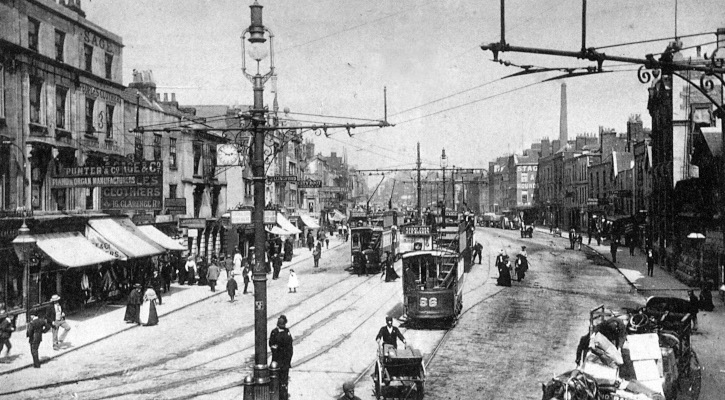
<p><span class="discreet">Old Market Bristol</span></p>
<p>May is Local History month, so to celebrate we’ve been looking back at our heritage project, Vice and Virtue, that documented the rich history of Old Market in East Bristol, where The Trinity Centre calls home.</p>
<p><strong>Early History</strong></p>
<p>Old Market is an ancient marketplace which once stood outside the walls of the Old City and served as a main thoroughfare for goods arriving from London into Bristol.</p>
<p>The area contains some of Bristol’s oldest buildings, with over 60 listed buildings including the Methodist Central Hall, The Palace Hotel, and – of course – Holy Trinity Church, aka The Trinity Centre.</p>
<p>Following the demolition of Bristol Castle in 1656, the area was redeveloped and stone from the castle is said to have been used to repave Old Market Street, with many of the original 17th century building frontages remaining to this day.</p>
<p>Old Market Street was a thriving centre for trade in meat and vegetables, as well as being home to an assortment of small industries specialising in the production of farming utensils, as well as several brewers, maltsters, and public houses.</p>
<p><strong>Industrial Revolution</strong></p>
<p>The Industrial Revolution radically transformed Old Market, with major new businesses attracting workers from across the South West. New opportunities for employment led to East Bristol’s rapid urbanisation during this period. By 1881, the population of St Phillips rose from approximately 8,000 in 1801 to 50,000.</p>
<p>Religion was seen as a major civilising force that followed rapid urbanisation, and as such, many churches were built in these expanding urban areas. One such church was Holy Trinity Church, now The Trinity Centre, which was built between 1829 and 1832 by Thomas Rickman and Henry Hutchinson, two architects from Birmingham and seated 1,500 people.</p>
<p>The new railway added to the hustle and bustle of Old Market. Traffic increased significantly when an electric tramway was introduced in 1876. Unsurprisingly, the street market struggled to coexist with the tram network, and the market ceased to operate during the 19th century, which signalled the start of rapid change in the area.</p>
<p><strong>The Golden Years, 1900-1939</strong></p>
<p>Old Market Street, with its transport links, entertainment centres and range of shops, was an important and vibrant part of Bristol. The first 30 years of the 20th century were marked by a series of bold new development, including The King’s Cinema, The Methodist Central Hall and The Empire Theatre, catering to a new appetite for culture and the arts. While the traditional street market from which Old Market gets its name had faded out during this period, in its place came a range of new stores and retail businesses.</p>
<p>Old Market was part of the ‘golden mile’ of streets that stretched from Lawrence Hill to the City Centre, with a diverse offering of shops attracting visitors from far and wide.</p>
<p><strong>Decline and Rejuvenation</strong></p>
<p>Bristol breathed a sigh of relief after the Second World War, in which the city’s Historic City Centre was decimated during the Bristol Blitz, with Castle and Vine Street being flattened by bombings. However, across the city, including in Old Market, life did not return to normal immediately, with essential food items subject to rationing until 1954.</p>
<p>After the Second World War, Old Market had become increasingly isolated and sidelined. Now Castle Street was no more, Old Market stood on the other side of a bomb site which many Bristolians feared to cross. The electric trams ceased operation in 1941, and by the 1950s, St Philips Station was closed to passengers, further isolating the area.</p>
<p>The bombing of Bristol’s historic centre led to new approaches to housing, in particular high-rise flats of the 1950s, which dramatically changed the face of St Jude’s and Old Market. Old Market also had to compete with the newly built Broadmead shopping centre. The development of the ring road and roundabout as part of the 1966 Development Plan further isolated Old Market from the rest of Central Bristol. Within a dozen years, the ‘high street’ atmosphere of Old Market had all but disappeared, with a dramatic decrease in footfall in the area.</p>
<p>However, the idea that Old Market went into terminal decline after the Ring Road masks a more complex picture. Old Market’s isolation opened a space in which new cultures and subcultures emerged. Since then, Old Market has becoming a bustling centre of nightlife and culture, becoming a home for Bristol’s LGBTQ+ community, alongside a new and diverse offering of restaurants, bars and clubs. With one of the fastest growing populations in Bristol, Old Market’s future seems to be one defined by its eclectic mix of cultures and lifestyles.</p>
<p>Click <a class="external-link" href="https://archive.trinitybristol.org.uk/timelines">here</a> to explore Trinity's archives to find out more about the history of The Trinity Centre and Old Market.</p>
<p>This news item is based on information gathered as part of Trinity's <a href="https://www.trinitybristol.org.uk/activities/past-projects/heritage/news/vice-and-virtue" class="internal-link">Vice and Virtue</a> project.</p>]]></content:encoded>
    <dc:publisher>No publisher</dc:publisher>
    <dc:creator>&lt;object object at 0x7f1373932580&gt;</dc:creator>
    <dc:rights></dc:rights>
    
      <dc:subject>edson</dc:subject>
    
    
      <dc:subject>holy trinity church</dc:subject>
    
    
      <dc:subject>community-timeline</dc:subject>
    
    
      <dc:subject>heritage</dc:subject>
    
    <dc:date>2024-05-10T08:40:00Z</dc:date>
    <dc:type>News Item</dc:type>
  </item>


  <item rdf:about="https://www.trinitybristol.org.uk/activities/archive/bcce">
    <title>BCCE recievership</title>
    <link>https://www.trinitybristol.org.uk/activities/archive/bcce</link>
    <description></description>
    <content:encoded xmlns:content="http://purl.org/rss/1.0/modules/content/"><![CDATA[<p>Bristol County Court put Trinity into the hands of the Official Reciever.</p>
<p style="text-align: center; "><img src="https://www.trinitybristol.org.uk/old-images/newsclip1.png" alt="" class="image-inline" title="" /></p>
<p>Bristol Caribbean Community Enterprise Group had debts of more than £100,000.</p>
<p>Midland Bank was the company's biggest creditor, but the Inland Revenue (who was owed £23,000) brought legal action.</p>
<p>Its Chairman at the time (from November 1983), Mr Richard Davis, said in Venue no.70:</p>
<p><i>"We had several months' work to do on improving the appearance of the place...it's tragic and we feel very bad about it all." </i></p>
<p>He believed they could turn their losses around but needed to overcome the drawbacks (like the gravestones outside the road widening and the state of the building) which were thought responsible for people's reluctance to use the place: <i>"We inherited a lot of problems. It's been a long, hard slog and it seems everything's been against us."</i></p>
<p>Centre Manager, Fitzroy De Freitas was accused of stealing money and running away to Jamaica. It transpired that he was actually living at his sister's house in Clevedon, penniless, with massive loans out on his former property due to Trinity. Sadly, the rumours stuck anyway.</p>
<p style="text-align: center; "><img src="https://www.trinitybristol.org.uk/old-images/dscf0948.png" alt="" class="image-inline" title="" /></p>]]></content:encoded>
    <dc:publisher>No publisher</dc:publisher>
    <dc:creator>&lt;object object at 0x7f1373932580&gt;</dc:creator>
    <dc:rights></dc:rights>
    
      <dc:subject>community-timeline</dc:subject>
    
    
      <dc:subject>community</dc:subject>
    
    <dc:date>2019-07-15T13:30:00Z</dc:date>
    <dc:type>Event</dc:type>
  </item>


  <item rdf:about="https://www.trinitybristol.org.uk/activities/archive/bcce-trinity">
    <title>BCCE buys Trinity </title>
    <link>https://www.trinitybristol.org.uk/activities/archive/bcce-trinity</link>
    <description>Trinity Centre is sold by the Church Commissioners to Bristol Caribbean Community Enterprise Ltd</description>
    <content:encoded xmlns:content="http://purl.org/rss/1.0/modules/content/"><![CDATA[<p>The Trinity Centre is sold to Bristol Caribbean Community Enterprise Ltd (BCCE) for £25,000, with a number of restrictive covenants, including stipulating its use for community purposes.</p>
<p>A sale price of £25,000 is agreed for Holy Trinity to the Caribbean Community Enterprise Limited.  Payment is expected in installments.  The purchasers are also expected 'to pay a substantial part of the purchase price and to have undertaken the conversion of the existing building before embarking on the levelling out of the churchyard.'</p>
<p>On 21 December 1977 Order in Council was made by Church Commissioners that Holy Trinity could be appropriated for use as a community centre. This order formed the basis of a protective covenant that is still in place to safeguard its use in the present day.</p>
<p><b>About BCCE</b></p>
<p>The St Paul's 'uprisings' of 1980 awakened the desire of African-Caribbean community activists to provide ownership for young people of a centre that offered entertainment and personal development relevant to their own perceived needs. Without the hard work and dedication of this organisation, who undertook all of the early restoration and conversion work, the Centre would not be the amazing functioning community space it is today.</p>
<p><b>BCCE timeline</b></p>
<h3>1977-1984 - Roots, rock and rebellion</h3>
<div id="content-core">
<div class="kssattr-target-parent-fieldname-text-732d90c607e04188b0c65dd49ba4d762 kssattr-macro-rich-field-view kssattr-templateId-widgets/rich kssattr-atfieldname-text " id="parent-fieldname-text-732d90c607e04188b0c65dd49ba4d762">
<ul>
<li>30 March 1977, the building was appropriated for community use by  Church Commissioners. Roy De Freitas led the plan to turn Trinity into a  Caribbean community institute</li>
<li>1 October 1981 - Two fires at opposite ends of the church caused localised damage to floors</li>
<li>31 December 1981 - the building was sold to Bristol Caribbean  Community Enterprise Ltd (BCCE) for £25,000, with a number of  restrictive covenants, including stipulating its use for community  purposes</li>
<li>Trinity became a predominant music venue for different genres popular at the time, from reggae through ska to punk.</li>
<li>9 January 1984 - Church Commissioners reported that building works  were carried out to construct a floor within the galleries that were not  in accordance with restrictive covenants placed upon the building</li>
<li>April 1984 - BCCE went into liquidation</li>
</ul>
<h3>1985-1989 - Life after BCCE</h3>
<ul>
<li>30 October 1985 estimating costs of £174k to repair leaking roofs, fire protection and a new intermediate floor to span the nave</li>
<li>6 June 1985 - Midlands Bank subsequently sell the freehold to Bristol City Council for £40,000</li>
<li>September 1987 - Bristol City Council commission a comprehensive  repair scheme and a new intermediate steel and concrete floor is  installed</li>
</ul>
</div>
</div>]]></content:encoded>
    <dc:publisher>No publisher</dc:publisher>
    <dc:creator>&lt;object object at 0x7f1373932580&gt;</dc:creator>
    <dc:rights></dc:rights>
    
      <dc:subject>community-timeline</dc:subject>
    
    
      <dc:subject>community</dc:subject>
    
    <dc:date>2019-07-12T11:35:00Z</dc:date>
    <dc:type>Event</dc:type>
  </item>


  <item rdf:about="https://www.trinitybristol.org.uk/activities/archive/arts-opportunity-theatre">
    <title>Arts Opportunity Theatre</title>
    <link>https://www.trinitybristol.org.uk/activities/archive/arts-opportunity-theatre</link>
    <description>Arts Opportunity Theatre staged 'Black &amp; White in Colour' in 1983</description>
    <content:encoded xmlns:content="http://purl.org/rss/1.0/modules/content/"><![CDATA[<p><span class="discreet"><i>Image - Arts Opportunity Theatre, c1980</i></span></p>
<p>Jan 21-22 Arts Opportunity Theatre staged 'Black &amp; White in Colour' in 1983. The play explored causes of the St Paul's Riots in 1980.</p>]]></content:encoded>
    <dc:publisher>No publisher</dc:publisher>
    <dc:creator>&lt;object object at 0x7f1373932580&gt;</dc:creator>
    <dc:rights></dc:rights>
    
      <dc:subject>community-timeline</dc:subject>
    
    
      <dc:subject>community</dc:subject>
    
    <dc:date>2019-11-15T11:05:00Z</dc:date>
    <dc:type>Event</dc:type>
  </item>


</rdf:RDF>
